Crochet Tote Bag The Ultimate Guide to Making & Styling Your Perfect Handmade Tote
May 13, 2026
Crochet Bags: 15 Stunning Styles to Make Plus Expert Tips for Every Skill Level
May 15, 2026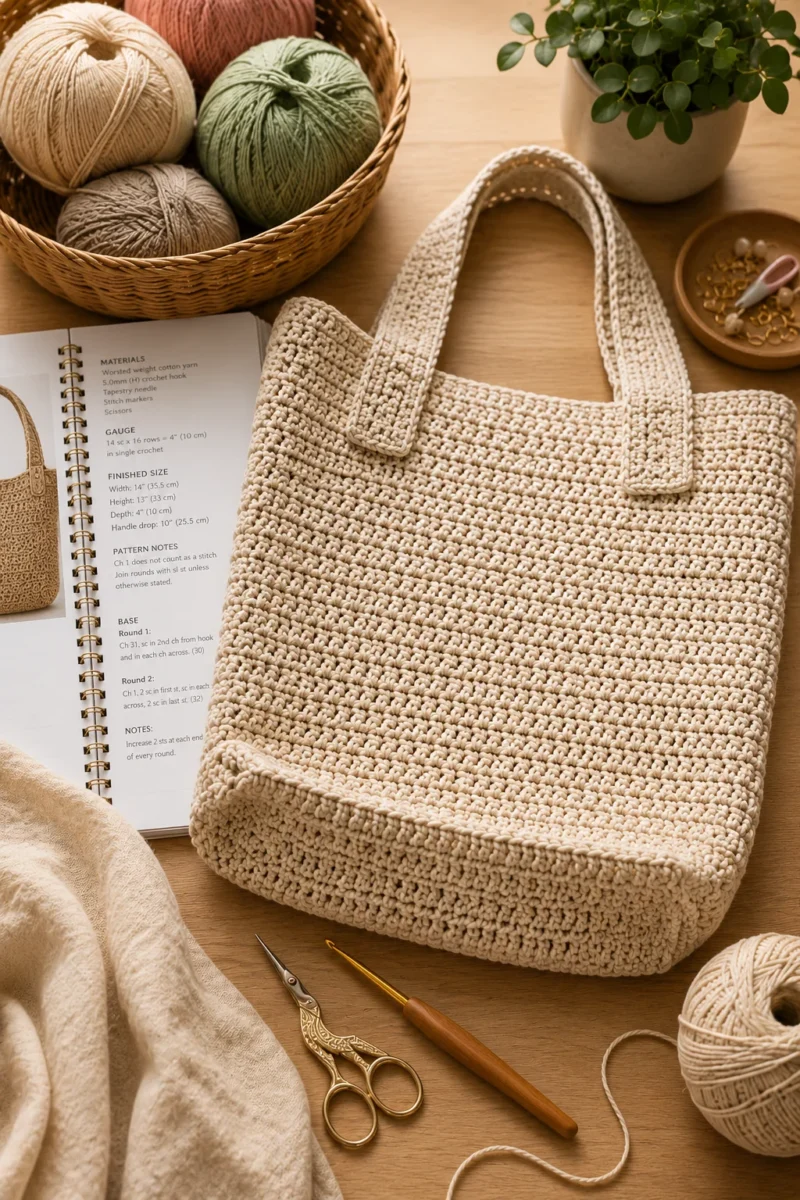
Finding the right crochet tote bag pattern can feel overwhelming—thousands of options exist, ranging from free blog posts to professionally designed PDF patterns. Some are excellent; others lead to frustration, wasted yarn, and unfinished projects.
Knowing what to look for in a pattern saves time and materials. This guide helps you evaluate patterns before you start, choose designs that match your skills, and customize patterns to create exactly what you want.
Whether you’re searching for your first tote bag pattern or your fifteenth, these insights help you find patterns worth your time.
What Makes a Good Crochet Tote Bag Pattern?
Quality patterns share certain characteristics that set them apart from poorly written alternatives.
Clear Materials List
A complete materials list includes:
- Specific yarn weight (not just “medium weight” but ideally a suggested brand and type)
- Yardage requirements (total yards/meters, not just number of skeins)
- Hook size
- Any notions needed (stitch markers, tapestry needles, buttons)
- Optional materials (lining fabric, interfacing, bag feet)
Accurate Gauge Information
Good patterns provide:
- Gauge measurements (stitches and rows per 4″)
- Which stitch pattern gauge is measured in
- Blocked or unblocked measurement specification
Comprehensive Sizing
The pattern should state:
- Finished dimensions (width, height, depth)
- Handle length and width
- Any sizing options available
Logical Organization
Well-written patterns organize instructions into clear sections:
- Base construction
- Body rounds/rows
- Handle instructions
- Finishing details
- Assembly (if multiple pieces)
Helpful Extras
Quality patterns often include:
- Stitch counts at the end of each row/round
- Photo tutorials for complex steps
- Special stitch definitions
- Finishing and care instructions
- Video tutorial links
Types of Tote Bag Patterns
Tote bag patterns vary in construction method, complexity, and finished appearance.
By Construction Method
Bottom-Up Construction
Start with the base, work upward for the body, add handles at the top. Most common approach.
Top-Down Construction
Begin at the opening, work downward, close the bottom. Less common for totes.
Flat Panel Construction
Create flat pieces (front, back, sides, base), then join. Allows for complex surface designs.
Continuous Construction
Work as one piece with no seaming. Creates seamless sides.
By Stitch Complexity
Single Stitch Patterns
One stitch throughout (usually single crochet). Ideal for beginners, creates consistent fabric.
Multi-Stitch Patterns
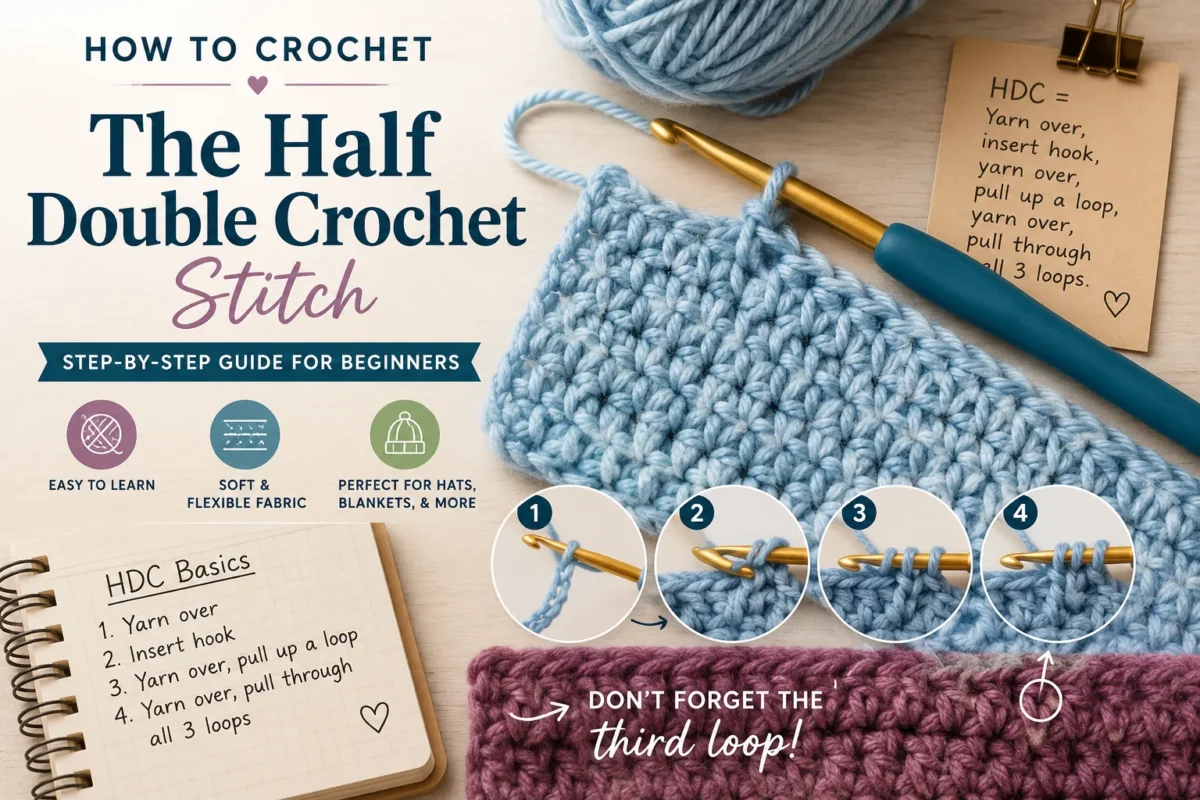
Combines stitches for texture. Half double crochet with single crochet accents, for example.
Textured Stitch Patterns
Features bobbles, cables, or other dimensional elements.
Colorwork Patterns
Incorporates multiple colors through stripes, tapestry crochet, or planned color pooling.
By Shape
Rectangular
Classic tote shape. Simple to construct, maximizes interior space.
Square
Equal width and height. Compact appearance.
Tapered
Narrower at the bottom than top. Slightly more complex construction.
Curved Bottom
Rounded base with straight sides. Requires shaping.
Pattern Features to Look For
Beyond basic quality, certain features make patterns easier to follow and more likely to produce good results.
Stitch Counts
Patterns that include stitch counts at the end of each row or round make catching mistakes easy. If your count doesn’t match, you know immediately something’s wrong.
Photo Support
Step-by-step photos clarify complex techniques. Look for patterns with images showing:
- Initial setup and starting rounds
- Transition points (base to body, body to handles)
- Finishing techniques
- Final product from multiple angles
Video Tutorials
Some patterns include companion videos. These are particularly valuable for visual learners and complex techniques.
Tested Patterns
Professional patterns are usually tested by multiple crocheters before release. Testers catch errors and confusing instructions, resulting in cleaner patterns.
Designer Support
Quality designers respond to questions and issue errata when problems are discovered. Check for contact information or active social media presence.
Skill Level Honesty
Accurate skill level ratings help you choose appropriate projects. Beware patterns labeled “beginner” that actually require intermediate skills.
Understanding Pattern Instructions
Tote bag patterns follow predictable structures once you learn to read them.
Standard Sections
Abbreviations
Definitions for shorthand used throughout the pattern.
Special Stitches
Any stitch combinations unique to the pattern, with instructions for working them.
Base
Instructions for the bottom of the bag—how to start and how large to make it.
Body
The main portion of the bag, working upward from the base.
Handles
How to create and attach handles. May be integrated with the body or worked separately.
Finishing
Final details: edging, weaving ends, blocking, adding hardware, lining instructions.
Common Pattern Language
“Work even” = Continue in pattern without increases or decreases
“Join with a slip stitch” = Connect the last stitch to the first to close a round
“Chain X, turn” = Make chains at row end, then turn work to begin next row
“Working in the round” = Continuous spiral without joining each round
“Joined rounds” = Each round connects with a slip stitch before starting the next
Matching Patterns to Your Skill Level
Choosing appropriately-leveled patterns sets you up for success.
True Beginner Patterns
Look for:
- Chain, slip stitch, and single crochet only
- Simple rectangular construction
- Handles integrated (not sewn separately)
- Detailed explanations of each step
- Photos or video support
Avoid for now:
- Multiple stitch types
- Shaping or increases/decreases in body
- Separate pieces requiring assembly
- Hardware integration
Easy/Confident Beginner Patterns
Can include:
- Multiple basic stitches
- Simple increases for base shaping
- Basic color changes (stripes)
- Handle construction as a separate element
- Simple finishing techniques
Intermediate Patterns
May feature:
- Textured stitch patterns
- Colorwork (tapestry crochet)
- Complex shaping
- Hardware integration
- Lining instructions
- Multiple pieces with assembly
Advanced Patterns
Often include:
- Intricate stitch patterns
- Complex colorwork
- Unusual construction methods
- Professional finishing techniques
- Multiple components with precise assembly
Customizing Tote Bag Patterns
Once you’re comfortable with patterns, modifications let you create exactly what you want.
Size Adjustments
Making Larger
- Increase base dimensions (add more starting chains for width, more rows for depth)
- Add more rounds to the body for height
- Extend handles for longer reach
Making Smaller
- Reduce base dimensions
- Work fewer body rounds
- Shorten handles
Material Substitutions
Yarn Changes
Match weight category. Swatch to ensure gauge matches or adjust hook size accordingly.
Color Changes
Any pattern can be worked in different colors than shown. Consider contrast for straps and accents.
Feature Additions
Pockets
Add a crocheted rectangle to the exterior or interior. Can be slip-pocket or buttoned.
Lining
Any unlined pattern can be lined. Measure finished bag dimensions and construct simple fabric liner.
Closures
Add magnetic snaps, button loops, or drawstring top to open-top patterns.
Base Reinforcement
Insert plastic canvas or foam core cut to base dimensions.
Stitch Substitutions
Replace the specified stitch with an alternative of similar height. For example, substitute moss stitch for single crochet for a different texture while maintaining dimensions.
Popular Tote Bag Pattern Styles
Certain pattern styles appear repeatedly because they work well and look great.
The Classic Market Bag
Open mesh construction that expands to hold contents. Usually features long handles for over-shoulder carry. Quick to make, extremely practical.
The Everyday Tote
Dense fabric in single or half-double crochet. Rectangular shape, two handles, often lined. The all-purpose workhorse.
The Beach Bag
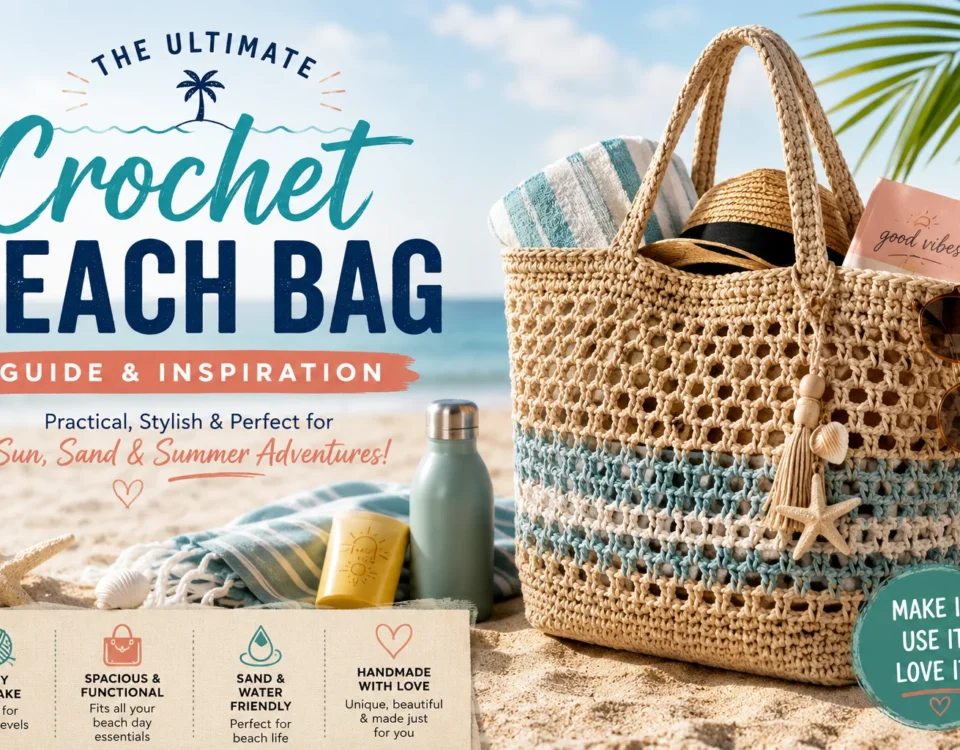
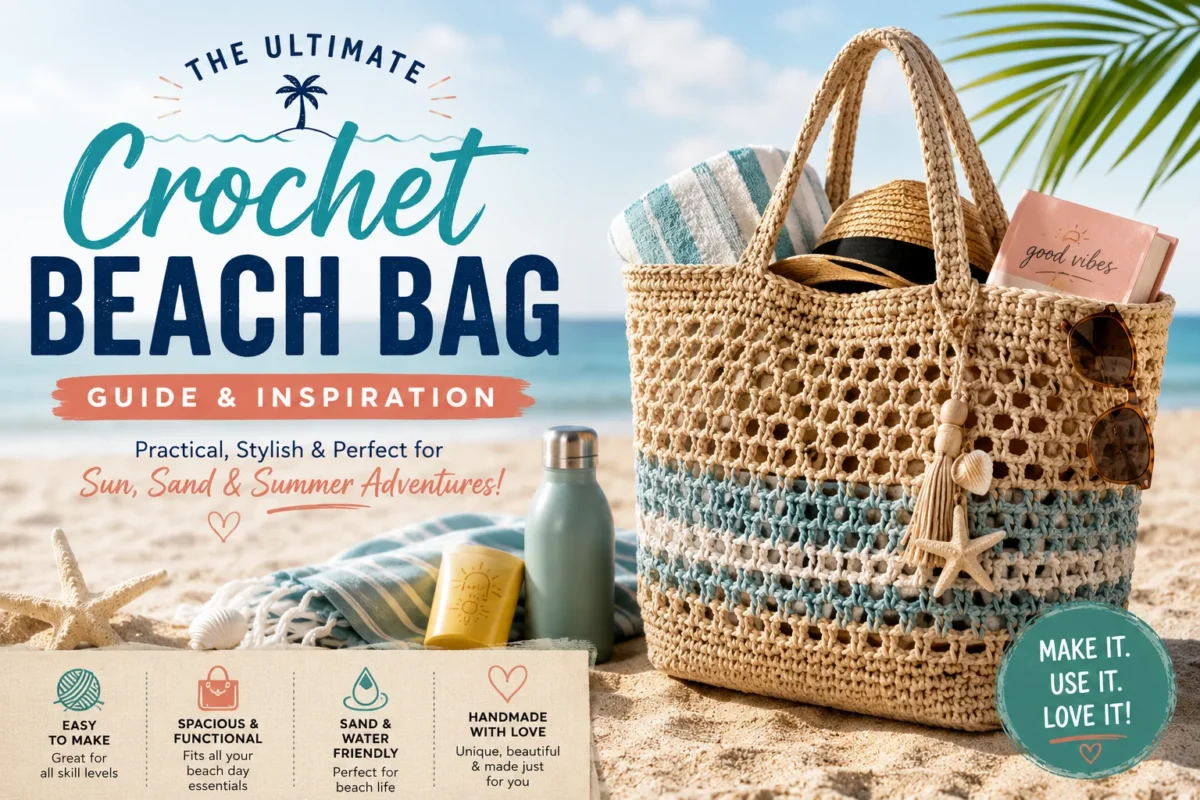
Oversized with open sections for sand drainage. May incorporate rope handles or have a “straw bag” aesthetic using raffia yarn.
The Striped Tote
Basic construction with colorwork interest. Simple stripes add visual impact without complex techniques.
The Textured Tote
Features bobbles, cables, or other dimensional elements. More time-intensive but creates striking results.
The Minimalist Tote
Clean lines, neutral colors, quality materials. Often incorporates leather handles for a boutique look.
Where to Find Quality Patterns
Not all pattern sources are equal. Here’s where to look for reliable options.
Free Sources
Crochet Blogs
Individual designers share free patterns. Quality varies significantly—look for well-established blogs with good reviews.
Ravelry
Free pattern section with user reviews and project photos from other makers. Helpful for evaluating patterns before starting.
YouTube
Video tutorials that walk through entire projects. Great for visual learners but less convenient for reference during work.
Pinterest
Aggregates patterns from across the web. Always click through to the original source.
Paid Sources
Independent Designers
Purchase through designer websites or storefronts. Often includes email support.
Ravelry
Large selection of paid patterns with user reviews.
Etsy
PDF patterns from independent designers. Check seller reviews.
Pattern Subscriptions
Monthly or annual access to pattern libraries. Good value for frequent crocheters.
Evaluating Before Purchasing
- Read reviews from other makers
- Check for project photos showing finished items
- Verify skill level matches your abilities
- Look for designer responsiveness to questions
- Ensure file format works for you (PDF, digital access, printable)
Common Pattern Issues and Solutions
Even good patterns sometimes create confusion. Here’s how to handle common problems.
Gauge Doesn’t Match
Adjust hook size. Too tight? Go up a hook size. Too loose? Go down. Re-swatch until gauge matches or accept size variation.
Instructions Seem Wrong
Check for pattern errata on the designer’s website or Ravelry page. Errors do happen in published patterns.
Stitch Count Doesn’t Match
Recount from the beginning of the section. If still off, check whether you’ve misunderstood a pattern instruction.
Result Looks Different from Photo
Consider yarn substitution effects—different fibers behave differently. Blocking can also dramatically change appearance.
Pattern Uses Unfamiliar Stitches
Look up video tutorials for specific stitches. Many are available on YouTube with clear demonstrations.
Missing Information
Contact the designer. Good designers respond to questions and appreciate feedback that helps improve patterns.
FAQ
What is the best crochet tote bag pattern for beginners?
Look for patterns using single crochet only, with rectangular construction and integrated handles. Avoid colorwork, textured stitches, or complex assembly for your first tote.
How long does it take to crochet a tote bag from a pattern?
A simple tote takes approximately 10-15 hours. Complex patterns with colorwork or textured stitches may take 20+ hours.
Can I sell totes made from a pattern?
Check the pattern’s license. Many allow commercial use; others prohibit it. When permissions are unclear, contact the designer.
Should I buy paid patterns or use free ones?
Both can be excellent or terrible. Paid patterns often (but not always) feature better testing and support. Free patterns sometimes lack detail. Read reviews regardless of price.
How do I know if a pattern will produce a sturdy bag?
Look for dense stitch patterns (single crochet, moss stitch), cotton or cotton-blend yarn recommendations, and instructions for reinforcing handles.
What if the pattern doesn’t specify yarn brand?
Use the yarn weight and fiber type specified. Any quality yarn in that weight should work—just swatch to verify gauge.
Conclusion
Finding the right crochet tote bag pattern transforms your project from frustrating to enjoyable. Look for clear instructions, appropriate skill levels, and patterns that include the features you want. Don’t hesitate to customize—patterns are starting points, not rigid rules.
With practice, you’ll develop preferences for certain designers, construction methods, and stitch patterns. Your pattern library becomes a curated collection of projects you love.
Start with one well-written pattern, complete it successfully, and build from there. Your handmade tote bag is waiting.