
Crochet Beach Bag: Your Complete Guide to Making the Perfect Summer Carryall
May 21, 2026
The Complete Guide to Crochet Hooks: Choosing, Using, and Caring for Your Tools Crochet Hook
May 23, 2026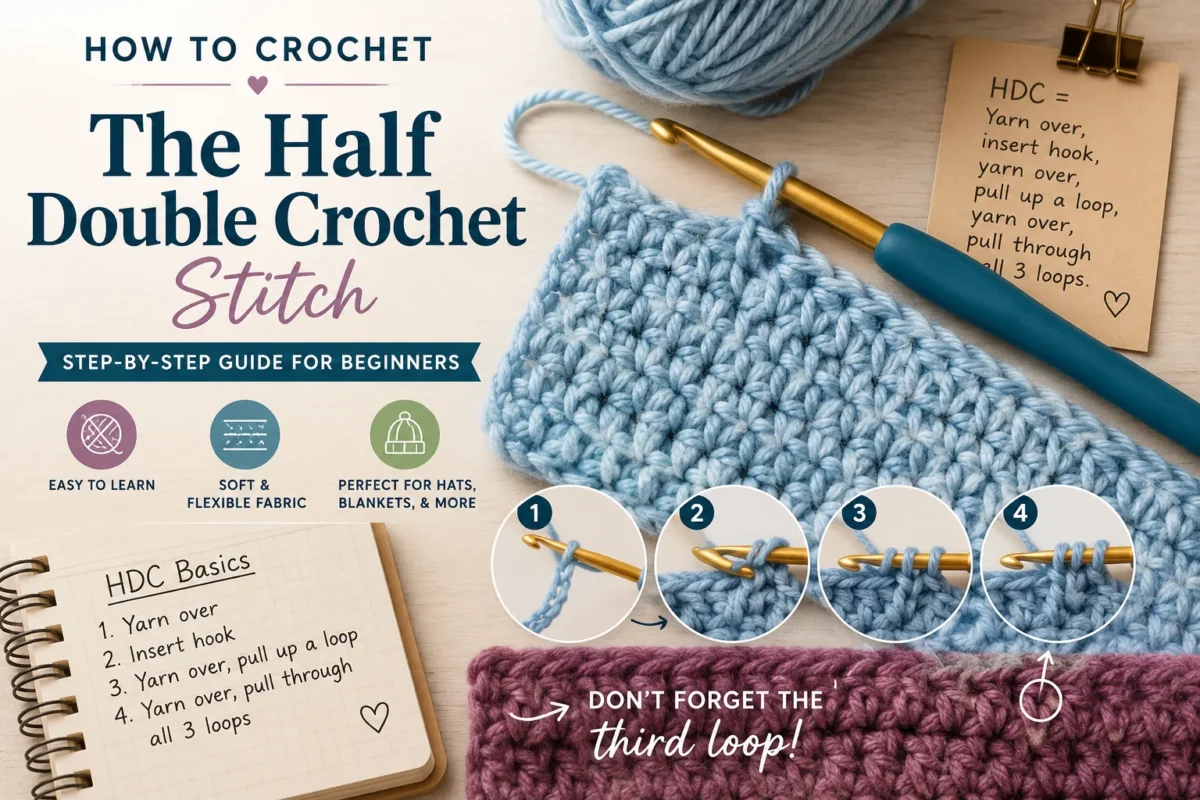
The half double crochet stitch sits right in the sweet spot between the single crochet and the double crochet. It’s taller than a single, shorter than a double, and it creates this wonderfully soft, slightly flexible fabric that feels almost cozy just to look at. If you’ve already learned the basic chain stitch and single crochet, the HDC is your natural next step — and honestly, once you get it, you’ll find yourself reaching for it constantly.
A lot of beginners skip straight from single crochet to double crochet and miss this gem entirely. That’s a shame, because the half double crochet produces a denser fabric than the double crochet while still working up faster than the single crochet. It’s the workhorse stitch for hats, scarves, baby blankets, and cozy home goods.
What Exactly Is the Half Double Crochet?
The half double crochet (abbreviated as HDC in US crochet terminology) is a basic crochet stitch that creates a slightly textured, medium-height fabric. The stitch gets its name because it’s roughly half the height of a double crochet — about two-thirds of the way between a single crochet and a double crochet in terms of height.
What makes it unique is a small technical quirk: when you pull through at the final step, you pull through all three loops on your hook at once instead of two at a time like you do in the double crochet. This creates that characteristic third loop on the back of each stitch — a feature that advanced crocheters actually exploit on purpose for ribbing and textured effects.
US vs UK Terminology
If you’re using a UK pattern, be careful. What Americans call a “half double crochet” doesn’t exist by that name in UK terminology. The UK equivalent is the “half treble crochet” (HTR). Always check which standard your pattern uses before you begin.
How to Work the Half Double Crochet Step by Step
You’ll need a few things before you start: a skein of medium-weight (worsted) yarn, a 5mm crochet hook, and about twenty minutes of patience for your first practice swatch.
Setting Up Your Foundation Chain
Start with a foundation chain of any number — for practice, cast on 16 chains. This gives you 15 working stitches once you account for the turning chain.
The turning chain for HDC is 2 chains. This counts as your first stitch in most patterns, though some modern patterns instruct you NOT to count it — always read your pattern notes carefully.
Working the HDC Stitch
Here’s the step-by-step breakdown:
Step 1: Yarn over (wrap the yarn over your hook from back to front).
Step 2: Insert your hook into the designated stitch. For your first row, that’s the third chain from your hook.
Step 3: Yarn over again and pull up a loop. You now have three loops on your hook.
Step 4: Yarn over one final time and pull through all three loops at once.
That’s it. You’ve just made a half double crochet.
Repeat across your foundation chain, yarn over at the end, turn your work, chain 2, and begin the next row.
Reading HDC in Pattern Abbreviations
When you see “HDC” in a US pattern, that’s your stitch. You might also see it written as:
- hdc2tog — half double crochet two together (a decrease)
- hdc-blo — half double crochet through back loop only
- hdc-flo — half double crochet through front loop only
- 2-hdc — two half double crochets in the same stitch (an increase)
Common Mistakes Beginners Make with HDC
Forgetting the initial yarn over. This is the number one error. Before you insert your hook into the stitch, you must yarn over first. If you forget, you’ll accidentally work a single crochet instead.
Twisting the yarn over. The yarn should wrap from back to front smoothly. If your yarn over feels awkward or twisted, your stitch tension will be uneven.
Miscounting turning chains. The 2-chain turn is counted as a stitch in most traditional patterns. Skipping this or double-counting it throws off your stitch count and makes your edges look messy.
Pulling through only two loops. Some beginners default to the double crochet technique and pull through two loops, then two loops again. For HDC, it’s all three loops in one go.
Tension too tight. HDC worked too tightly produces a stiff, inflexible fabric. If your hook is hard to insert into stitches, loosen up. Your gauge should feel relaxed.
The Third Loop Technique — What It Is and Why It Matters
Every half double crochet has a hidden superpower: the third loop. When you look at the back of your HDC fabric, you’ll notice a horizontal loop sitting behind each stitch. This is called the third loop.
Working into this third loop exclusively creates a ribbed, stretchy texture that mimics knitting ribbing almost perfectly. This technique is widely used in:
- Crochet hat brims
- Sock cuffs
- Sweater ribbing
- Headband construction
How to Work into the Third Loop
After completing your first row of HDC, turn your work and chain 2. Now, instead of inserting your hook under both top loops of the stitch (the standard method), tilt your work slightly and look for that third loop sitting behind. Insert your hook into that loop only, then complete your HDC as normal.
The result is a beautifully stretchy, ridged fabric that looks far more complex than it actually is.
Gauge and Yarn Weight Recommendations
The half double crochet stitch is extremely forgiving with yarn weights, which makes it versatile for dozens of project types.
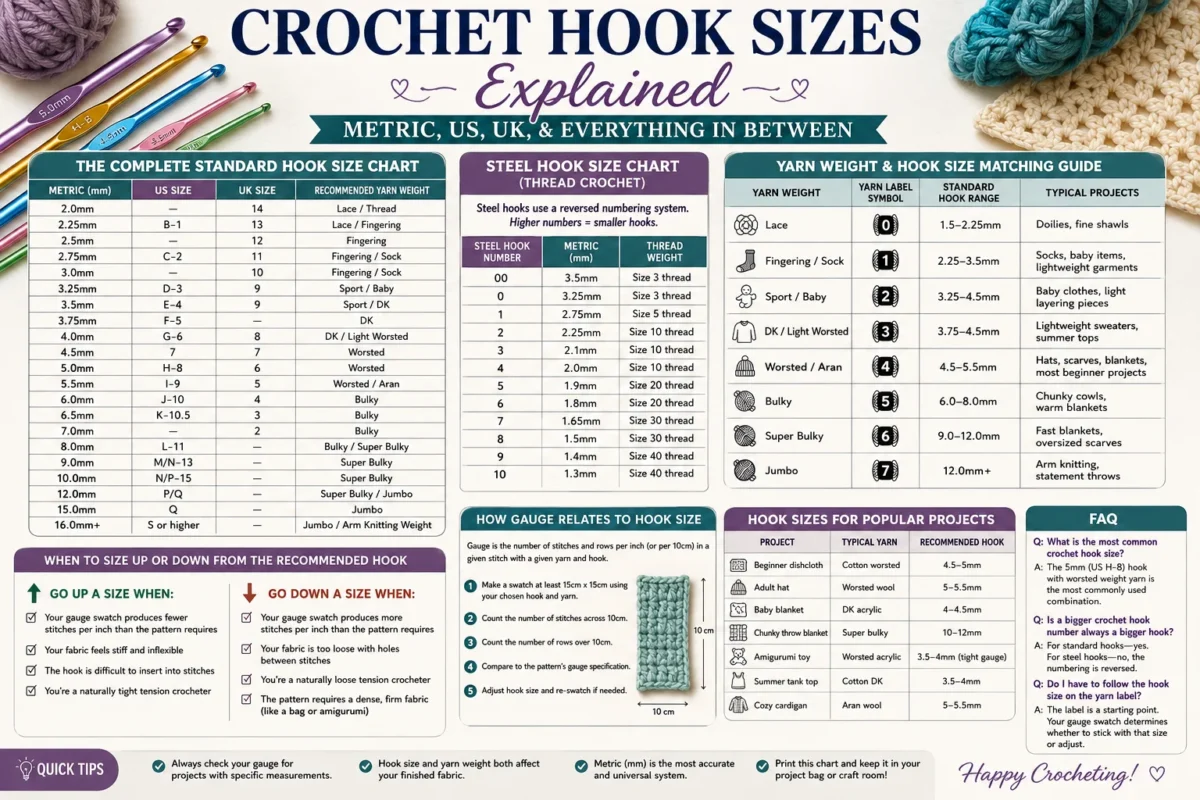
| Yarn Weight | Hook Size | Approx. Gauge (10cm) | Best For |
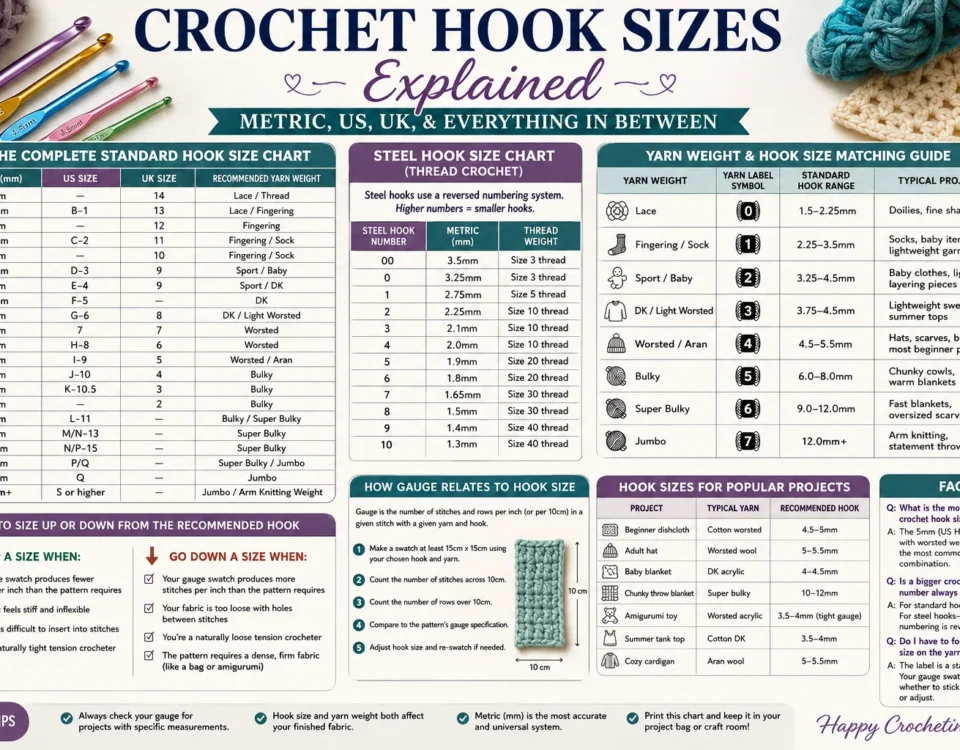
| Fingering/Sock | 2.25–3.5mm | 22–24 HDC | Baby items, lightweight shawls |
| DK Weight | 3.75–4.5mm | 18–20 HDC | Garments, light blankets |
| Worsted Weight | 5–5.5mm | 14–16 HDC | Hats, scarves, washcloths |
| Bulky | 6–8mm | 10–12 HDC | Chunky blankets, cowls |
| Super Bulky | 9mm+ | 7–9 HDC | Fast home decor projects |
Always work a gauge swatch before starting any sized project — especially garments. A 4-inch square swatch takes ten minutes and saves hours of frustration.
Best Projects to Make with the Half Double Crochet Stitch
The HDC stitch is genuinely one of the most project-friendly stitches in crochet. Here’s where it absolutely shines:
Crochet Hats
HDC creates a fabric with just the right amount of stretch for fitted beanies. The stitch height works up quickly, and the ribbing technique using the third loop makes professional-looking hat brims without any complicated stitch work.
Baby Blankets
The soft, dense fabric produced by HDC is perfect for baby items. It’s warm enough to be practical, soft enough to be gentle on skin, and works up faster than single crochet so you can finish a baby blanket gift in a weekend.
Scarves and Cowls
The flexibility of HDC fabric drapes beautifully around the neck. A simple 15-stitch-wide HDC scarf in a variegated yarn looks stunning with almost zero effort.
Dishcloths and Washcloths
Cotton yarn worked in HDC creates a slightly textured surface that’s ideal for kitchen and bath use. The fabric is absorbent, durable, and easy to wash.
Troubleshooting Your HDC Fabric
Edges are uneven or slanting: You’re probably miscounting your turning chain or skipping the last stitch of each row. Use a stitch marker in the first and last stitch of every row until the habit locks in.
Fabric is too stiff: Go up a hook size. Stiff fabric usually means your tension is too tight or your hook is too small for the yarn.
Fabric is too loose and holey: Go down a hook size. Loose fabric with visible gaps might also mean you’re not completing each stitch fully before moving on.
Stitch count keeps changing: This usually comes down to the turning chain. Decide at the start of your project whether you’re counting it as a stitch and stick to that decision throughout.
FAQ
What is the difference between half double crochet and double crochet? The double crochet is taller and uses two “pull through” actions at the end, pulling through two loops twice. The HDC pulls through all three loops at once in a single action, making it shorter and slightly denser.
Does the turning chain count as a stitch in HDC? In traditional patterns, the chain-2 turning chain counts as the first HDC. However, many modern patterns specifically state it does NOT count — always follow the individual pattern’s instructions.
Can I substitute HDC for single crochet or double crochet? You can substitute stitches, but it will change your gauge significantly. HDC is taller than single crochet and shorter than double crochet, so your finished project dimensions will differ. Swatching is essential if you substitute.
Why does my HDC fabric look twisted? Check your yarn over direction. The yarn should wrap from back to front consistently. Also ensure you’re inserting your hook correctly into the stitch — going under both top loops unless your pattern specifies otherwise.
What yarn is best for learning HDC? Smooth, medium-weight (worsted) yarn in a light or medium color is ideal for learning. Avoid dark colors (hard to see your stitches) and fuzzy yarns like mohair (extremely difficult to see or rip out mistakes).
Conclusion
The half double crochet stitch is one of those techniques that feels slightly unfamiliar for about ten minutes and then becomes second nature forever. Its versatility, speed, and the beautiful fabric it produces make it a genuine staple stitch — not just a stepping stone between single and double crochet.
Practice a swatch today. Work a few rows of straight HDC, then experiment with the third loop technique. By the time you’ve finished that swatch, you’ll already be thinking about what project to make first.
Start with a simple hat pattern or a baby blanket — both are forgiving, fast, and incredibly satisfying to finish.