Crochet Bag Pattern: How to Read, Choose & Master Patterns for Beautiful Handmade Bags
May 13, 2026
Crochet Tote Bag Pattern Your Complete Guide to Finding and Following the Perfect Pattern
May 13, 2026
The crochet tote bag might be the most practical project a crocheter can make. It’s big enough to be genuinely useful, simple enough for beginners, and endlessly customizable for experienced makers. Plus, every time you carry it, you’re reminded of the satisfaction of having made something with your own hands.
Tote bags replace disposable plastic bags at the grocery store, carry books and laptops, haul beach essentials, and organize everyday life. A well-made crochet tote lasts for years—developing character rather than falling apart.
This guide covers everything from choosing the right yarn to constructing handles that won’t stretch. Whether you’re making your first tote or your fifteenth, you’ll find practical techniques that result in bags worth using.
What Makes a Tote Bag a Tote?
Tote bags share certain characteristics that distinguish them from other bag types:
- Open top — No closure (or minimal closure) for easy access
- Two handles — Designed to be carried by hand or over the shoulder
- Rectangular or square shape — Simple, maximizing interior space
- Roomy interior — Designed to hold substantial contents
- Flat bottom — Sits upright when set down
Within these parameters, tremendous variation exists. Totes range from small lunch bags to enormous beach carryalls. They can be structured or slouchy, plain or elaborately decorated.
The tote’s simplicity is its strength. The basic form works for countless purposes, and the construction is accessible to crocheters at any skill level.
Why Crochet Tote Bags Are So Popular
Several factors drive the enduring popularity of crocheted totes:
Sustainability
Reusable bags reduce plastic waste. A cotton crochet tote replaces hundreds of disposable bags over its lifetime—and eventually biodegrades.
Customization
You control every element: size, color, texture, handles, pockets, and decorations. The bag fits your needs exactly.
Durability
Properly made crochet fabric handles daily use. Cotton totes often last longer than mass-produced alternatives.
Visibility
Crochet texture is distinctive. Your handmade tote stands out in a sea of canvas bags.
Versatility
One design serves multiple purposes: groceries, beach, work, gym, travel, or everyday carry.
Approachability
Totes are excellent projects for beginners—simple construction with impressive results—while offering enough design scope to challenge advanced crocheters.
Choosing Materials for Your Crochet Tote
Material selection directly impacts durability, appearance, and usability.
Yarn Selection
100% Cotton
The standard choice. Strong, washable, holds shape reasonably well. Mercerized cotton offers extra sheen and durability.
Cotton-Linen Blends
Combines cotton’s softness with linen’s structural integrity. Excellent resistance to stretching.
Cotton-Bamboo Blends
Softer hand with slight sheen. Good for bags that won’t carry heavy loads.
T-Shirt Yarn
Creates quick, chunky totes with interesting texture. Heavier but very durable.
Jute/Hemp
Rustic appearance, exceptional strength. Best for market bags rather than everyday totes.
Raffia
Creates trendy straw-like bags. Stiffer to work with but produces beautiful results.
Yarn Weight Considerations
| Yarn Weight | Best For |
| DK (#3) | Lightweight totes, detailed stitch patterns |
| Worsted (#4) | Versatile all-purpose totes |
| Bulky (#5) | Quick projects, chunky aesthetic |
| Super Bulky (#6) | Very fast projects, substantial bags |
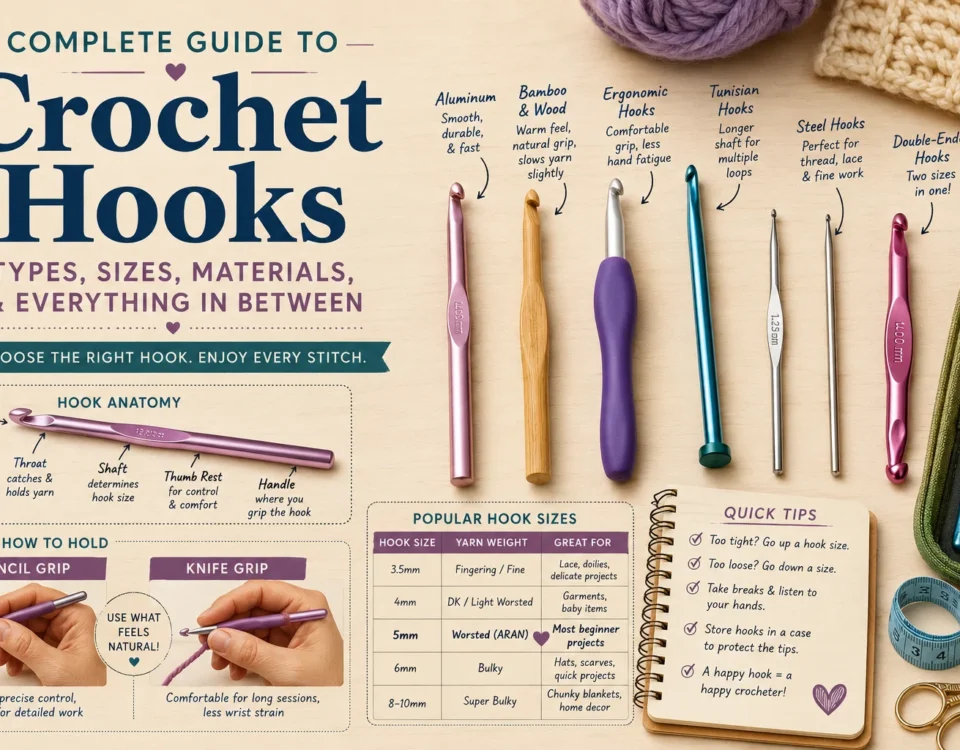
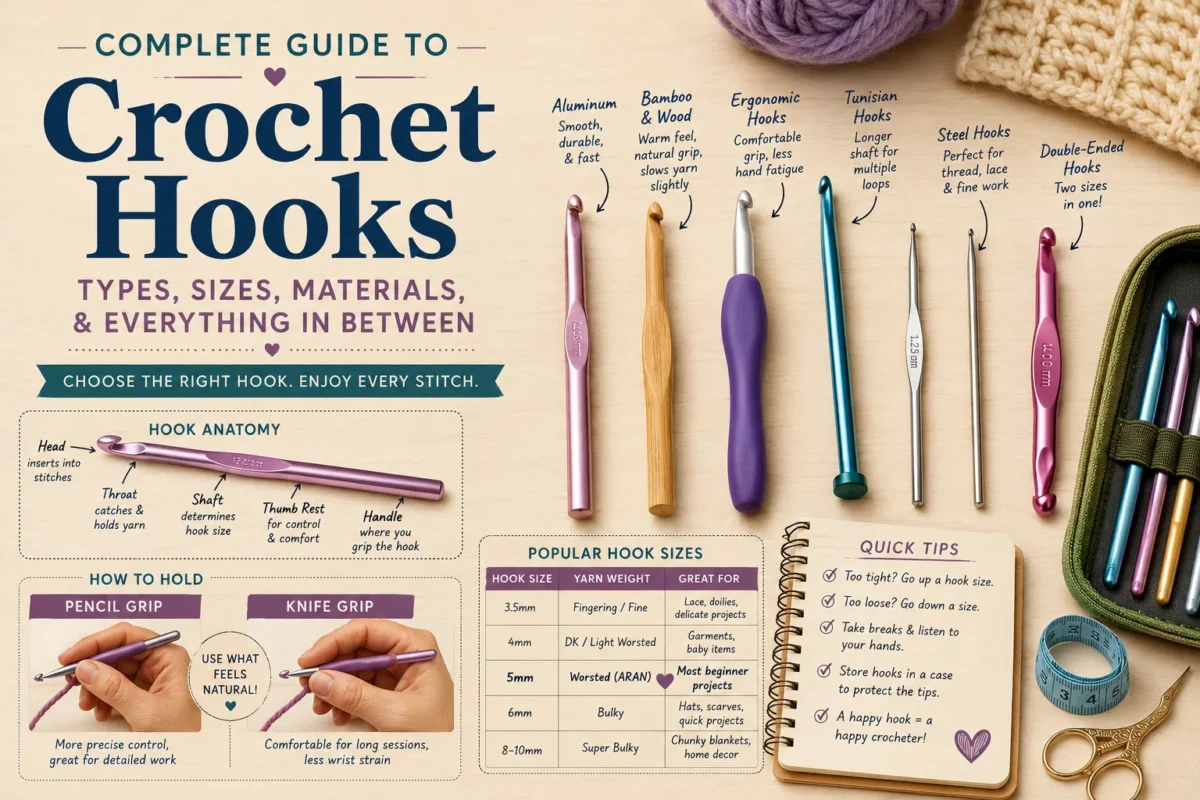
Hook Selection
For tote bags, use a hook 0.5-1mm smaller than the yarn label suggests. Tighter fabric stretches less and holds shape better.
Best Stitches for Tote Bags
Your stitch choice affects both aesthetics and function.
For Maximum Durability
Single Crochet
Dense, tight fabric that holds its shape. Classic choice for structured totes.
Waistcoat Stitch
Single crochet worked into the V of the stitch rather than under the top loops. Creates a knit-like appearance with excellent stability.
Thermal Stitch
Creates double-layered fabric. Extremely sturdy, ideal for heavy-duty totes.
For Texture and Visual Interest
Moss Stitch (Linen Stitch)
Alternating single crochet and chains create woven-look fabric. Reduces stretching and biasing.
Herringbone Stitch
Distinctive diagonal texture. Slightly stretchier than single crochet.
Alpine Stitch
Textured rows that create interesting dimensional fabric.
For Market/Mesh Bags
Basic Mesh
Chain-and-single-crochet mesh that expands to hold more. Traditional market bag construction.
Solomon’s Knot
Decorative open mesh. More delicate but beautiful.
For Colorwork
Tapestry Crochet
Carrying multiple colors across rows for patterns and images. Creates thick, durable fabric.
Anatomy of a Well-Made Crochet Tote
Understanding construction components helps you build better bags.
The Base
The foundation of your tote. Options include:
Rectangular Base
Work rows of single crochet to desired dimensions, then work around all edges to begin the body.
Oval Base
Start with a chain, work around both sides with increases at the ends.
Flat Circle
For bucket-style totes. Work in the round with regular increases.
No Separate Base
Some totes start at the top and work down, or are constructed from flat panels joined together.
The Body
The main portion of the bag. Considerations:
- Work continuously or join rounds (continuous creates subtle spiral; joined gives cleaner lines)
- Maintain consistent tension throughout
- Count stitches regularly to keep sizing even
- Consider decorative elements: stripes, texture changes, colorwork
The Opening
How the top of the bag finishes:
- Simple edging (slip stitch or single crochet rounds)
- Decorative border
- Turned hem for reinforcement
- Integrated drawstring casing
Handle Attachment Points
Where handles connect to the body:
- Positioned at sides for shoulder carry
- Positioned closer to center for hand carry
- Reinforced with extra stitches or hardware
- Attached to multiple rows for strength
Handle Options and Attachment Methods
Handles make or break a tote bag. Weak handles stretch, dig into shoulders, or detach entirely.
Handle Types
Crocheted Straps
Made from the same yarn as the bag. Can match or contrast. Work tightly for strength.
Rope or Cord
Purchased handles that are crocheted around or attached to crocheted tabs.
Leather Handles
Purchased leather pieces sewn or riveted to the bag. Add a boutique look.
Wooden or Bamboo Handles
Ring or D-shaped handles that the bag attaches to. Create a polished aesthetic.
Webbing
Cotton or nylon webbing reinforces crocheted straps or serves as stand-alone handles.
Reinforcement Techniques
Crochet Tightly
The most basic reinforcement. Work strap stitches firmly.
Double Layering
Crochet a tube or fold a flat strap and seam edges. Creates thicker handles.
Webbing Core
Insert webbing inside a crocheted tube or casing.
Attach Deep
Don’t just connect handles at the top row. Extend attachment several rows down the body and sew or crochet securely.
Hardware
D-rings and swivel clasps distribute stress and allow removable straps.
Step-by-Step Beginner Tote Construction
Here’s a straightforward approach to your first crochet tote:
Materials
- 400g worsted-weight cotton yarn
- 5mm crochet hook
- Stitch markers
- Tapestry needle
The Base
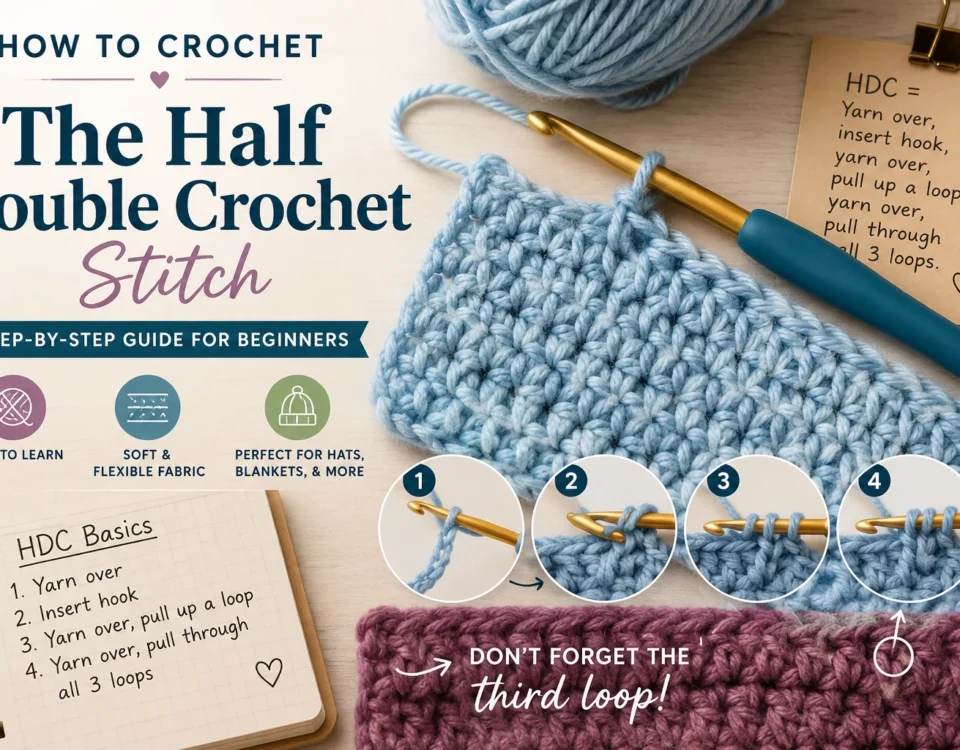
Chain 31. Work single crochet in the second chain from hook and across (30 sc). Chain 1, turn. Continue working rows until the base measures approximately 12″ x 5″. Don’t fasten off.
The Body
Instead of turning, continue around the perimeter:
- Work 1 sc in the side of each row along the short edge
- Work 1 sc in each foundation chain along the bottom
- Work 1 sc in the side of each row along the other short edge
- Work 1 sc in each stitch across the top
Place a marker at the start of the round. Continue working in continuous spiral rounds until the body measures 12-14″ tall.
Finishing the Top
Work 2 rounds of single crochet, slip stitching to join each round for a neat edge.
The Handles
Locate handle positions (approximately 4″ from each edge). On the next round:
- Work in pattern to the first handle position
- Chain 25 (adjust for desired handle length)
- Skip approximately 5 stitches
- Continue to the second handle position
- Repeat chain and skip
- Continue around
On the following round, work single crochet into each chain to reinforce the handles.
Finishing
Weave in all ends. Block the completed bag.
Advanced Tote Features
Once you’ve mastered basic construction, consider adding:
Pockets
Interior Slip Pockets
Create a separate crocheted rectangle, then sew it to the lining before attaching the lining to the bag.
Exterior Patch Pockets
Crochet a pocket piece and sew it directly to the bag exterior during finishing.
Lining
Lining transforms functionality:
- Cut fabric to match bag dimensions plus seam allowances
- Sew fabric pieces together
- Insert lining into bag, fold under top edge
- Hand-stitch lining to the inside of the bag opening
Base Reinforcement
Insert a stiff base to prevent sagging:
- Plastic canvas cut to size
- Cardboard covered in fabric
- Foam core board
- Commercial bag base insert
Closures
While totes are traditionally open-top, closures add security:
- Magnetic snaps sewn to lining
- Button and loop at center
- Ribbon ties
- Drawstring through top row
Decorative Elements
- Tassels at corners
- Pom-poms on handles
- Leather accents
- Beaded fringe
- Embroidered details
Styling Your Crochet Tote
A handmade tote works for nearly any casual to smart-casual context.
Everyday Errands
Neutral-colored totes in natural materials blend with any outfit while handling groceries, library books, or farmers’ market finds.
Work and Commuting
A structured tote in a solid color looks polished enough for professional settings. Choose a size that fits a laptop if needed.
Beach and Pool
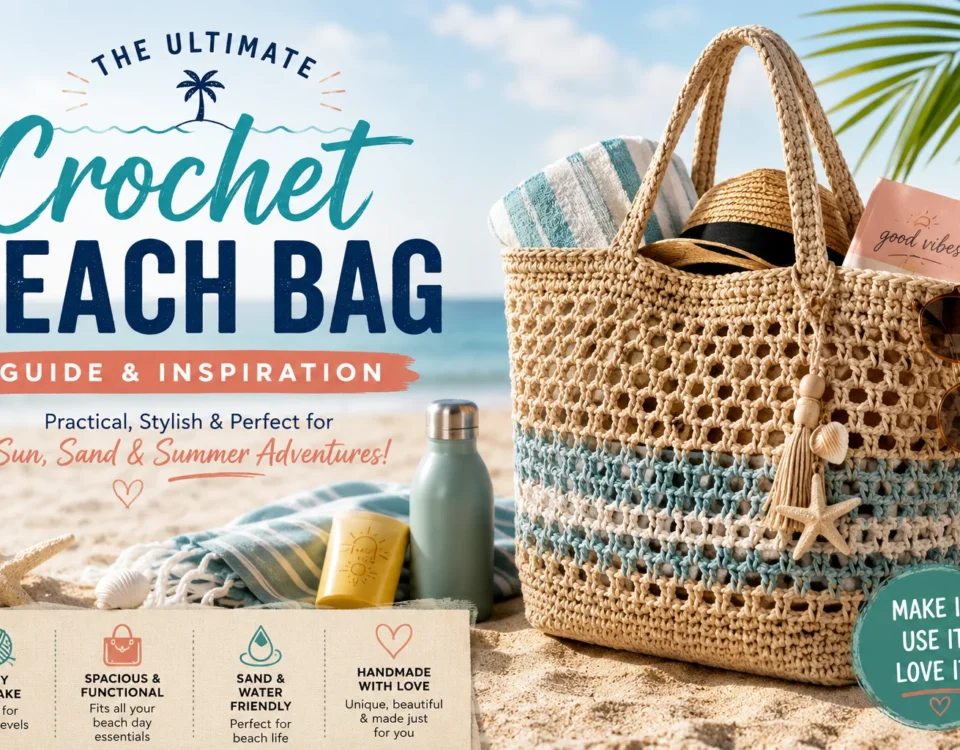
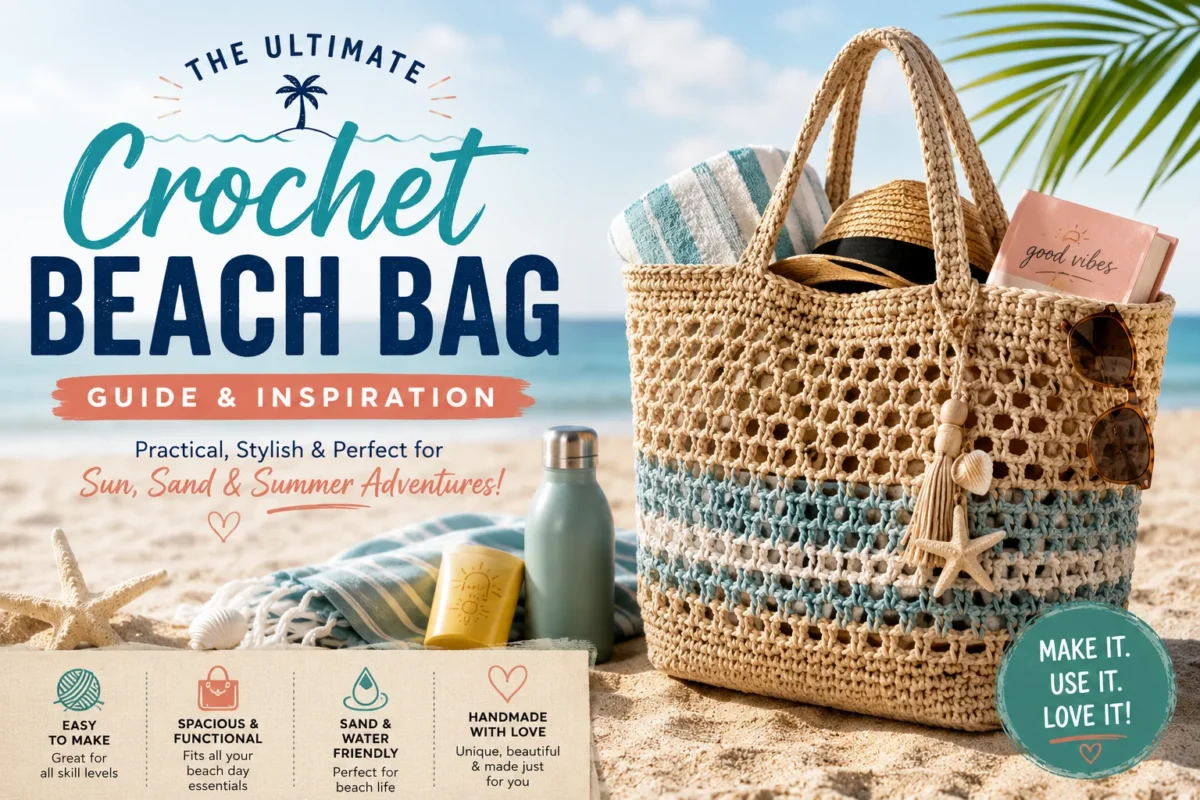
Large mesh or open-weave totes allow sand and water to escape. Pair with sunglasses and a cover-up.
Weekend Outings
Colorful or textured totes add visual interest to casual weekend looks. Match to the season: pastels for spring, earth tones for fall.
Travel
A foldable crochet tote works as a secondary bag for souvenirs or as a beach bag at the destination.
Care and Maintenance
Proper care extends your tote’s useful life.
Regular Maintenance
- Empty completely after each use
- Shake out debris
- Air out between uses
- Store stuffed to maintain shape
Washing Cotton Totes
- Hand wash in cool water with mild detergent
- Gently squeeze—never wring or twist
- Rinse thoroughly
- Roll in a towel to remove excess water
- Reshape and dry flat
Machine Washing (Cotton Only)
- Place in a mesh laundry bag
- Cold water, gentle cycle
- Never machine dry
- Reshape while damp
Storage
- Store in a breathable dust bag or pillowcase
- Keep away from direct sunlight to prevent fading
- Store flat or stuffed—not hanging, which stretches handles
FAQ
How much yarn do I need for a crochet tote bag?
For a standard market tote using worsted-weight cotton, plan for 350-500g depending on size and stitch density.
What size should a crochet tote bag be?
Standard grocery totes measure approximately 14″ wide x 12″ tall x 5″ deep. Adjust based on intended use—larger for beach bags, smaller for everyday carry.
How do I prevent the handles from stretching?
Work handles tightly, consider webbing reinforcement, attach handles to multiple rows of the body, and use non-stretchy yarn.
Can beginners make a crochet tote bag?
Absolutely. A basic single-crochet tote is an excellent beginner project—simple construction with satisfying results.
How do I add a zipper to a crochet tote?
Sew a fabric lining with an integrated zipper, then attach the lining to the bag. Direct zipper attachment to crochet rarely looks clean.
Will my crochet tote hold heavy items?
Yes, if properly constructed. Use cotton yarn, tight stitches, reinforced handles, and consider adding a stiff base insert.
How long does it take to crochet a tote bag?
A simple tote takes approximately 10-15 hours. Complex designs with colorwork or detailed stitches take longer.
Conclusion
The crochet tote bag represents everything great about handmade accessories: it’s useful, beautiful, sustainable, and uniquely yours. Whether you’re making one for everyday errands or as a gift, the skills you build transfer to countless future projects.
Start with a simple design in a quality cotton yarn. Master the basics—sturdy base, even body, reinforced handles—then experiment with textures, colors, and features. Each tote you make teaches something new.
Your perfect handmade tote is one project away.