The Complete Guide to Crochet Hooks: Choosing, Using, and Caring for Your Tools Crochet Hook
May 23, 2026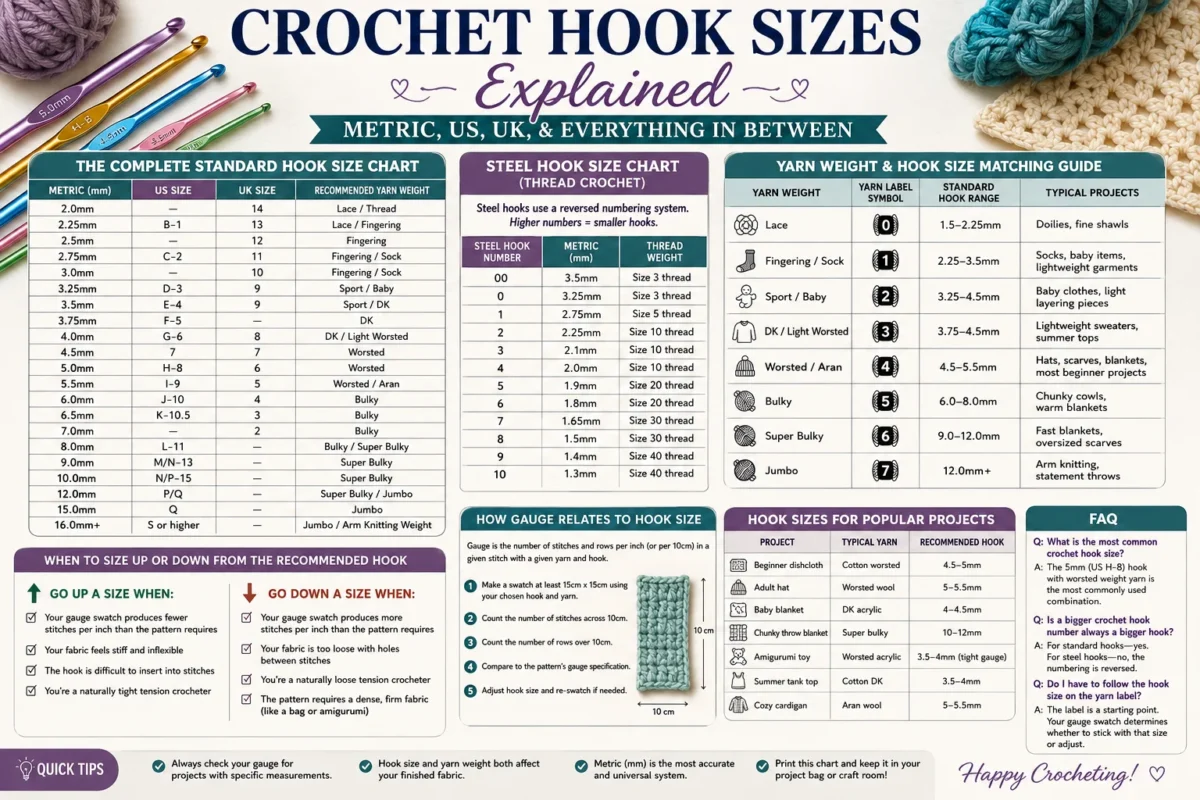
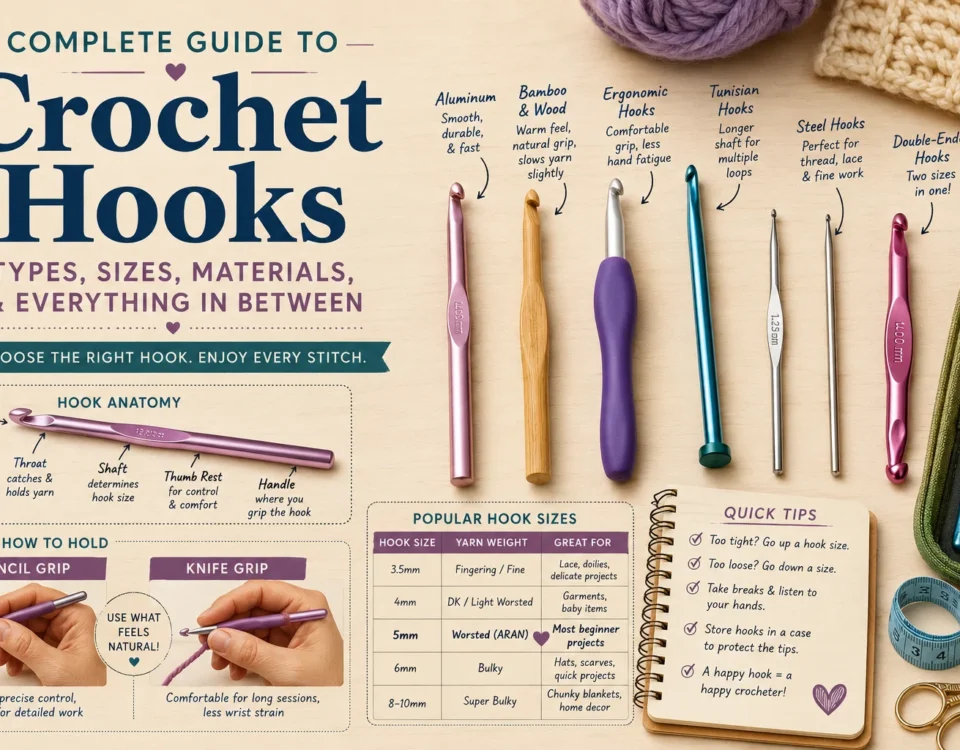
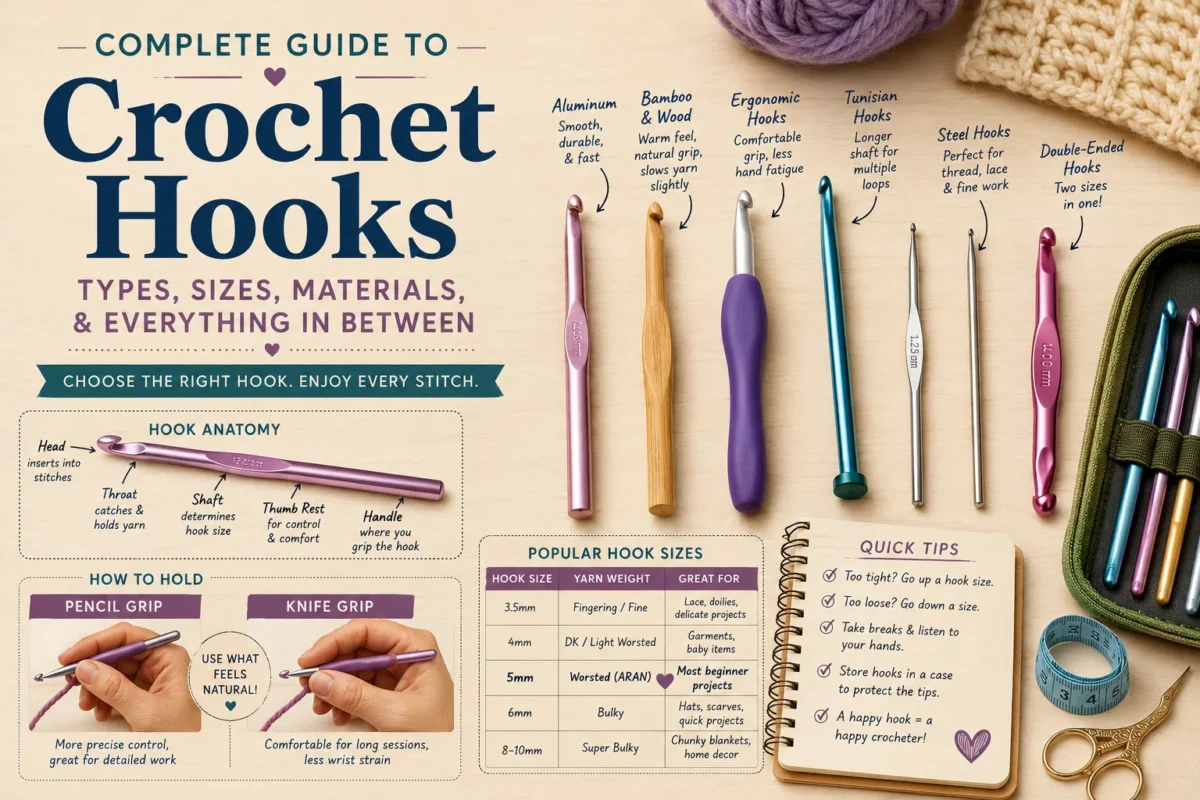
One of the most confusing parts of starting crochet isn’t the stitches — it’s the numbering system. Or rather, the numbering systems, plural, because the US, UK, and metric world all use completely different labels for the same hooks. Add steel hooks into the mix and their backward numbering, and it’s genuinely baffling for anyone new to the craft.
This guide cuts through all of it. You’ll find a complete crochet hook size chart, yarn weight recommendations, conversion tables, and practical guidance on when to size up or down.
Crochet Hook Sizes Explained: Metric, US, UK, and Everything In Between
Why Hook Sizing Is Confusing
The core issue is that crochet hook sizing was never globally standardized. The US developed its own lettering system (B through S and beyond). The UK used a completely different numbering system. Most of the rest of the world uses metric measurements in millimeters — which is by far the clearest and most logical system.
The good news: most modern hooks are now labeled with their metric size prominently, making the conversion issue less critical than it used to be. But older patterns, UK patterns, and specialty hooks still use the older systems, so knowing how to cross-reference is genuinely useful.
The Complete Standard Hook Size Chart
| Metric (mm) | US Size | UK Size | Recommended Yarn Weight |
| 2.0mm | — | 14 | Lace / Thread |
| 2.25mm | B-1 | 13 | Lace / Fingering |
| 2.5mm | — | 12 | Fingering |
| 2.75mm | C-2 | 11 | Fingering / Sock |
| 3.0mm | — | 10 | Fingering / Sock |
| 3.25mm | D-3 | 9 | Sport / Baby |
| 3.5mm | E-4 | 9 | Sport / DK |
| 3.75mm | F-5 | — | DK |
| 4.0mm | G-6 | 8 | DK / Light Worsted |
| 4.5mm | 7 | 7 | Worsted |
| 5.0mm | H-8 | 6 | Worsted |
| 5.5mm | I-9 | 5 | Worsted / Aran |
| 6.0mm | J-10 | 4 | Bulky |
| 6.5mm | K-10.5 | 3 | Bulky |
| 7.0mm | — | 2 | Bulky |
| 8.0mm | L-11 | — | Bulky / Super Bulky |
| 9.0mm | M/N-13 | — | Super Bulky |
| 10.0mm | N/P-15 | — | Super Bulky |
| 12.0mm | P/Q | — | Super Bulky / Jumbo |
| 15.0mm | Q | — | Jumbo |
| 16.0mm+ | S or higher | — | Jumbo / Arm Knitting Weight |
The Steel Hook Size Chart (Thread Crochet)
Steel hooks use a separate, reversed numbering system. Higher numbers mean smaller hooks — the opposite of the standard system. Steel hooks are used exclusively for crochet thread, not regular yarn.
| Steel Hook Number | Metric (mm) | Thread Weight |
| 00 | 3.5mm | Size 3 thread |
| 0 | 3.25mm | Size 3 thread |
| 1 | 2.75mm | Size 5 thread |
| 2 | 2.25mm | Size 10 thread |
| 3 | 2.1mm | Size 10 thread |
| 4 | 2.0mm | Size 10 thread |
| 5 | 1.9mm | Size 20 thread |
| 6 | 1.8mm | Size 20 thread |
| 7 | 1.65mm | Size 30 thread |
| 8 | 1.5mm | Size 30 thread |
| 9 | 1.4mm | Size 40 thread |
| 10 | 1.3mm | Size 40 thread |
Yarn Weight and Hook Size Matching Guide
Yarn labels almost always include a recommended hook size, and that’s your best starting point. The table below gives standard ranges by yarn weight category:
| Yarn Weight | Yarn Label Symbol | Standard Hook Range | Typical Projects |
| Lace | 0 | 1.5–2.25mm | Doilies, fine shawls |
| Fingering / Sock | 1 | 2.25–3.5mm | Socks, baby items, lightweight garments |
| Sport / Baby | 2 | 3.25–4.5mm | Baby clothes, light layering pieces |
| DK / Light Worsted | 3 | 3.75–4.5mm | Lightweight sweaters, summer tops |
| Worsted / Aran | 4 | 4.5–5.5mm | Hats, scarves, blankets, most beginner projects |
| Bulky | 5 | 6.0–8.0mm | Chunky cowls, warm blankets |
| Super Bulky | 6 | 9.0–12.0mm | Fast blankets, oversized scarves |
| Jumbo | 7 | 12.0mm+ | Arm knitting, statement throws |
When to Size Up or Down from the Recommended Hook
The recommended hook size on a yarn label is a starting point, not a rule. Here’s when to deviate:
Go Up a Size When:
- Your gauge swatch produces fewer stitches per inch than the pattern requires
- Your fabric feels stiff and inflexible
- The hook is difficult to insert into stitches
- You’re a naturally tight tension crocheter
Go Down a Size When:
- Your gauge swatch produces more stitches per inch than the pattern requires
- Your fabric is too loose with visible holes between stitches
- You’re a naturally loose tension crocheter
- The pattern requires a dense, firm fabric (like a bag or amigurumi)
How Gauge Relates to Hook Size
Gauge is the number of stitches and rows per inch (or per 10cm) in a given stitch with a given yarn and hook. Every pattern that relies on finished measurements — garments, fitted hats, sized blankets — will specify gauge.
To check your gauge:
- Make a swatch at least 15cm x 15cm using your chosen hook and yarn.
- Count the number of stitches across 10cm.
- Count the number of rows over 10cm.
- Compare to the pattern’s gauge specification.
- Adjust hook size and re-swatch if needed.
This process feels tedious to beginners, but it is the single most reliable way to ensure your finished project matches the intended dimensions.
Hook Sizes for Specific Popular Projects
| Project | Typical Yarn | Recommended Hook |
| Beginner dishcloth | Cotton worsted | 4.5–5mm |
| Adult hat | Worsted wool | 5–5.5mm |
| Baby blanket | DK acrylic | 4–4.5mm |
| Chunky throw blanket | Super bulky | 10–12mm |
| Amigurumi toy | Worsted acrylic | 3.5–4mm (tight gauge) |
| Summer tank top | Cotton DK | 3.5–4mm |
| Cozy cardigan | Aran wool | 5–5.5mm |
FAQ
What is the most common crochet hook size? The 5mm (US H-8) hook paired with worsted weight yarn is the most commonly used combination for beginner and intermediate projects.
Why do some crochet hook sizes have letters and some have numbers? The US sizing system uses letters (B through K for most standard hooks) and numbers (for steel hooks and some larger sizes). This is a historical artifact of the system developed before metric standardization.
Is a bigger crochet hook number always a bigger hook? For standard hooks — yes, bigger metric number means a larger hook diameter. For steel hooks — no, the numbering is reversed and a larger number means a smaller hook.
What hook size should I use for Aran weight yarn? Aran weight yarn typically calls for a 5mm–5.5mm hook, though your individual tension may require adjusting up or down by half a size.
Do I have to follow the hook size on the yarn label? The label recommendation is a starting point. Your actual gauge swatch determines whether to stick with that size or adjust. Always swatch for any project where finished dimensions matter.
Conclusion
Understanding crochet hook sizes isn’t as complicated as it first appears — the metric system is logical once you’re used to it, and most modern hooks make it easy by printing the mm size clearly on the handle.
Keep this chart bookmarked. Whether you’re cross-referencing a vintage UK pattern, shopping for steel hooks for your first doily, or figuring out why your blanket is coming out too small, this reference covers everything you need.
Print the charts, swatch consistently, and let the right hook size do half the work for you.