
Bag O Day Crochet: Exploring Popular Crochet Bag Tutorials and Patterns
May 20, 2026
Half double crochet Stitch: A Complete Guide for Beginners and Beyond
May 22, 2026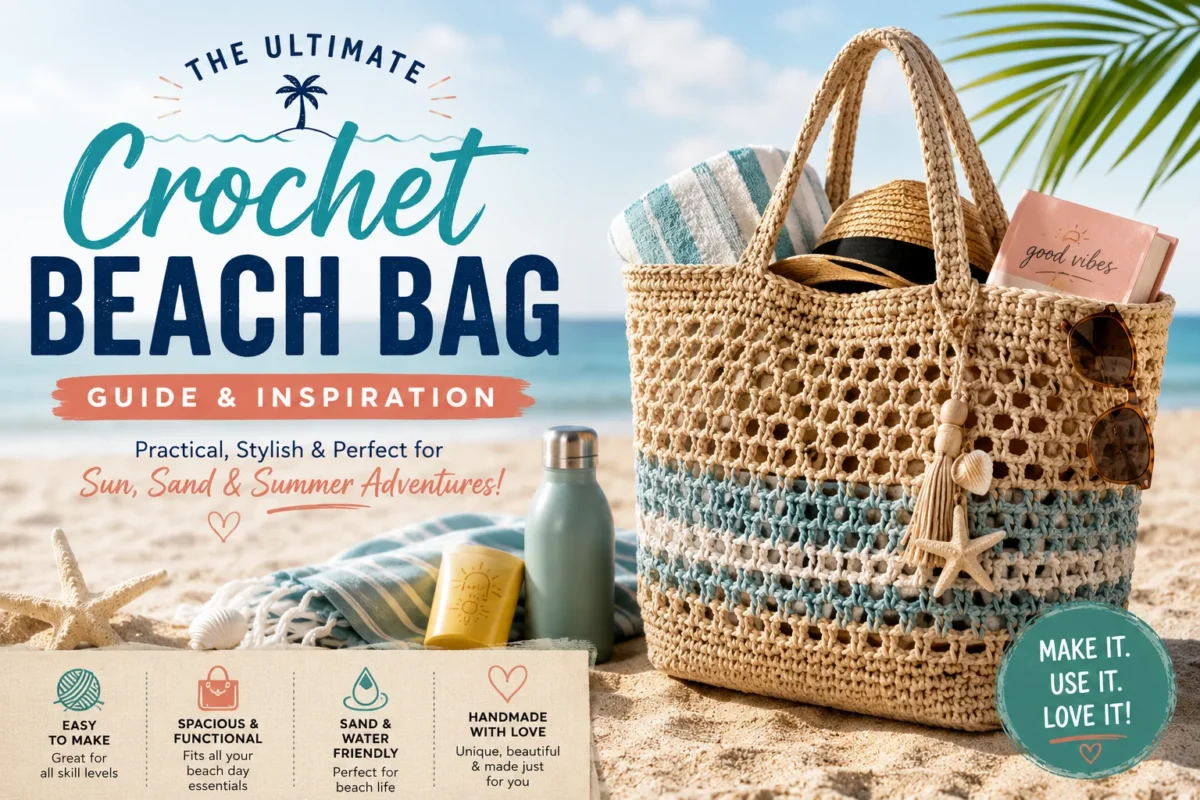
A great crochet beach bag is the summer accessory that actually works. It hauls towels, sunscreen, books, snacks, and all the other essentials a beach day demands—while looking beautiful on your shoulder.
Unlike structured handbags that fuss about their contents, beach bags embrace chaos. They’re large, accommodating, and unfazed by sand, sunscreen, or damp swimsuits. They’re also perfect crochet projects: practical, forgiving of imperfection, and endlessly customizable.
This guide covers everything you need to create the ideal beach bag for your summer adventures.
Why Crochet Beach Bags Are Summer Essentials
Beach bags face particular demands that make crochet an ideal choice:
Sand Management
Open-weave crochet allows sand to fall through rather than collecting at the bottom. Solid-bottom bags trap sand; mesh designs release it.
Wet Tolerance
Cotton and plant-fiber yarns dry quickly and don’t rot when exposed to moisture. A wet swimsuit won’t ruin a cotton crochet bag.
Breathability
Mesh construction allows air circulation, helping damp items dry and preventing musty odors.
Capacity
Crochet stretches to accommodate more than you might expect. The same bag that held one towel in the morning holds three plus a picnic on the way home.
Durability
Well-made crochet handles the stress of heavy contents, repeated use, and seasonal storage.
Visual Appeal
The handmade texture adds interest to simple summer outfits. A crochet beach bag is a statement piece as well as a functional item.
Choosing the Right Size
Beach bags skew larger than everyday bags—you’re carrying more stuff.
Standard Sizing
| Size | Dimensions | Best For |
| Medium | 14″ x 12″ x 4″ | Solo beach trips, light packing |
| Large | 18″ x 14″ x 6″ | Family trips, full day outings |
| Extra Large | 22″ x 16″ x 8″ | Multi-day trips, group needs |
What Needs to Fit?
Consider your typical beach day contents:
- Beach towels (1-4)
- Sunscreen and skincare
- Books or magazines
- Snacks and water bottles
- Extra clothing/cover-ups
- Toys (if traveling with kids)
- Valuables (phone, wallet, keys)
- Wet swimsuits for the return trip
Size your bag to your actual needs. Too small is frustrating; too large becomes unwieldy.
Construction Considerations
Larger bags require:
- Sturdier straps
- Reinforced attachment points
- Possibly stiffer bases
- More yarn investment
Plan construction to support the size you’re making.
Best Materials for Beach Bags
Material choice dramatically impacts functionality.
Top Yarn Choices
Cotton
The classic choice. Strong, washable, dries quickly, and softens with use. Mercerized cotton resists stretching better than unmercerized.
Cotton-Linen Blends
Added linen increases strength and reduces stretch while maintaining cotton’s washability.
Jute
Rustic, sturdy, and naturally water-resistant. Stiffer to work with but creates substantial bags with organic appeal.
Raffia
Creates the trendy “straw bag” look. Natural raffia is derived from palm leaves; synthetic raffia is easier to find and work with.
Hemp
Extremely durable, naturally resistant to mold and mildew. Softens significantly with washing.
Polypropylene
Synthetic but water-resistant and lightweight. Good for bags that will get very wet.
What to Avoid
- Acrylic — Stretches excessively, doesn’t dry well
- Wool — Holds water, can mildew, attracts pests
- Delicate fibers — Can’t handle beach conditions
- Dark colors — Get very hot in sun (unless you want that)
Color Considerations
Light and bright colors suit beach aesthetics:
- Natural/cream
- Aqua/turquoise
- Coral/pink
- Sunny yellow
- Classic navy
Dark colors absorb heat—contents can get quite warm in direct sun.
Stitch Selection for Beach Bags
Different sections of beach bags benefit from different stitch approaches.
For Mesh Sections
Basic Mesh (ch-3, sc in next space)
Simple, open construction that allows excellent sand drainage and stretches to accommodate contents.
Filet Mesh
Creates a grid pattern with more defined structure than basic mesh.
Solomon’s Knot
Decorative open weave with interesting visual texture.
For Solid Sections
Single Crochet
Dense, sturdy fabric. Good for base and bottom portions.
Half Double Crochet
Slightly softer than single crochet, works up faster.
Moss Stitch
Woven-look texture that minimizes stretching and biasing.
Combined Approaches
Many successful beach bags combine solid and open sections:
- Solid base (prevents items poking through the bottom)
- Mesh sides (allows drainage and stretching)
- Solid top band (provides structure and handle attachment)
This combination optimizes both function and aesthetics.
Construction Approaches
Beach bags can be constructed several ways.
Bottom-Up Construction
The Standard Approach
- Create a solid rectangular or oval base
- Work upward in rounds
- Transition from solid to mesh stitches as desired
- Finish with solid rounds at top for structure
- Add handles
This produces seamless sides with good structural integrity.
Flat Panel Construction
For Patterned Bags
- Create front and back panels
- Create side/bottom strip
- Join panels to strip
- Add handles
Works well for colorwork or textured patterns that are easier to work flat.
Continuous Mesh
For Expandable Market-Style Bags
- Start at the top opening
- Work mesh in increasing rounds
- Decrease at the bottom
- Add handles
Creates bags that expand dramatically under load.
Granny Square Construction
For Patchwork Aesthetic
- Create multiple granny squares
- Join into panels
- Assemble into bag shape
- Add base if desired
- Add handles
Great for using multiple colors or yarn scraps.
Handle and Strap Options
Beach bags need handles that are comfortable under load.
Short Handles
For hand-carrying or crooking over the arm. Usually 5-8 inches from attachment to top of arc.
Pros: Compact, secure feeling
Cons: Can’t throw over shoulder
Long Handles/Shoulder Straps
Designed to rest on the shoulder with bag at hip level. Usually 18-24 inches from attachment to strap top.
Pros: Hands-free carrying, comfortable for heavy loads
Cons: Can slip, bag swings more
Adjustable Straps
Includes hardware for length adjustment.
Pros: Versatile, fits different body types
Cons: More complex construction, hardware can corrode
Double Handle Options
Both short handles AND a long shoulder strap.
Pros: Maximum versatility
Cons: More construction work, can look busy
Handle Construction
For beach bags carrying heavy loads:
- Crochet handles tightly
- Consider webbing reinforcement inside
- Attach to multiple rows of the body
- Test security before finishing
Handles are the failure point for most bags—invest extra effort here.
Practical Features to Include
Think about functionality while designing.
Interior Pockets
Zippered Security Pocket
For phone, keys, and wallet. Can be added via lining.
Slip Pockets
Open-top pockets for quick-access items.
Closures
Drawstring Top
Thread cord through top rounds for a gathered closure. Keeps sand out during transport.
Magnetic Snap
Clean closure that doesn’t require hands. Works best with lining.
Toggle and Loop
Simple, no-hardware closure option.
Base Reinforcement
Insert plastic canvas or foam board in the base to:
- Keep the bag standing
- Prevent heavy items pushing through
- Provide structure
Waterproof Liner
For seriously wet contents:
- Wet swimsuit compartment
- Waterproof fabric section
- Removable waterproof bag inside
Key Clip
Small D-ring inside for attaching keys prevents digging through bag contents.
Caring for Beach Bags
Beach conditions are tough on bags. Proper care extends life.
After Each Use
- Empty completely
- Shake out sand
- Turn inside out and shake again
- Air dry if damp
- Store loosely
Periodic Cleaning
Cotton and Cotton Blend Bags
- Rinse in cool water to remove salt and sand
- Hand wash with mild detergent if needed
- Reshape while damp
- Air dry completely before storing
Raffia Bags
- Wipe with damp cloth
- Don’t submerge
- Reshape while damp
- Dry away from direct heat
Jute and Hemp Bags
- Shake and brush to remove debris
- Spot clean as needed
- Don’t oversoak—these fibers can stiffen
- Dry thoroughly to prevent mildew
End of Season
Before long-term storage:
- Clean thoroughly
- Ensure completely dry
- Store in breathable container (not plastic)
- Add cedar or lavender for pest prevention
- Store flat or stuffed—not hanging
Beach Bag Styling Ideas
Your handmade beach bag is part of your summer look.
Classic Beach
Pair neutral-toned bags (natural, white, tan) with any beachwear. The bag complements rather than competes.
Boho Beach
Earth tones, fringe details, and natural textures. Layer with gauzy cover-ups and layered jewelry.
Bright and Playful
Bold-colored bags in coral, turquoise, or yellow make summer statements. Keep the rest of the outfit simple.
Sophisticated Seaside
Structured bags in navy or black work for upscale beach clubs or resort dining. Add leather handles for polish.
Festival Beach
Colorful granny squares, pom-poms, and tassels. More is more for festival styling.
Matching Bag to Beach Activity
Different beach activities suggest different bag features.
Casual Beach Day
Priority features:
- Large capacity for towels and supplies
- Mesh sections for sand drainage
- Long shoulder straps for hands-free carrying
Beach with Kids
Priority features:
- Extra large size
- Multiple pockets for organization
- Easy-clean materials
- Secure closures to contain small items
Active Beach (Surfing, Volleyball)
Priority features:
- Durable construction
- Secure closure
- Compact enough to not interfere
- Quick-dry materials
Beach-to-Dinner
Priority features:
- Polished appearance
- Secure internal pocket for valuables
- Size for essentials rather than beach gear
- Style that transitions from sand to restaurant
Tropical Vacation
Priority features:
- Raffia or straw-look for resort aesthetic
- Large enough for day-trip supplies
- Coordinates with vacation wardrobe
- Packs well for travel
FAQ
What size beach bag should I make?
For solo use, 14″ x 12″ suffices. For families or full-day outings, go larger (18″ x 14″ or more). Consider what you typically carry and size accordingly.
Will my crochet beach bag stretch out?
Some stretching is normal, especially with mesh construction. Use cotton or cotton-blend yarns, work tightly, and reinforce stress points to minimize excessive stretching.
How do I get sand out of my crochet bag?
Open-weave construction allows sand to fall through. For residual sand, turn the bag inside out and shake vigorously. Rinse in water if needed.
Can my crochet beach bag get wet?
Cotton, jute, and hemp bags handle moisture well. Rinse to remove salt water after beach use, then air dry thoroughly.
Should I line my beach bag?
Lining adds pockets and protects delicate items but reduces the bag’s ability to drain water and release sand. Consider a partial lining or separate waterproof pouch for valuables.
How long does it take to crochet a beach bag?
A simple market-style bag takes 8-12 hours. Larger bags with complex construction may take 15-25 hours.
What’s the best closure for a beach bag?
Drawstring closures are practical—they keep sand out during transport and don’t require hardware. Magnetic snaps work well with lined bags.
Conclusion
A handmade crochet beach bag combines function and beauty in a way mass-produced bags can’t match. It handles the demands of beach life—sand, water, sun, and heavy loads—while looking like something you’d find in a boutique.
Choose materials that tolerate beach conditions, construct handles that support the weight you’ll carry, and add features that make your specific beach activities easier. The resulting bag will serve you for seasons of summer adventures.
Start planning your beach bag now—summer is waiting. And if you’re looking for crochet bag patterns you have to check this blog post.