

Wide Leg Jeans: Everything You Need to Know to Wear Them Confidently
April 5, 2026
The Best Jeans for Comfort When You Are Sitting All Day
April 5, 2026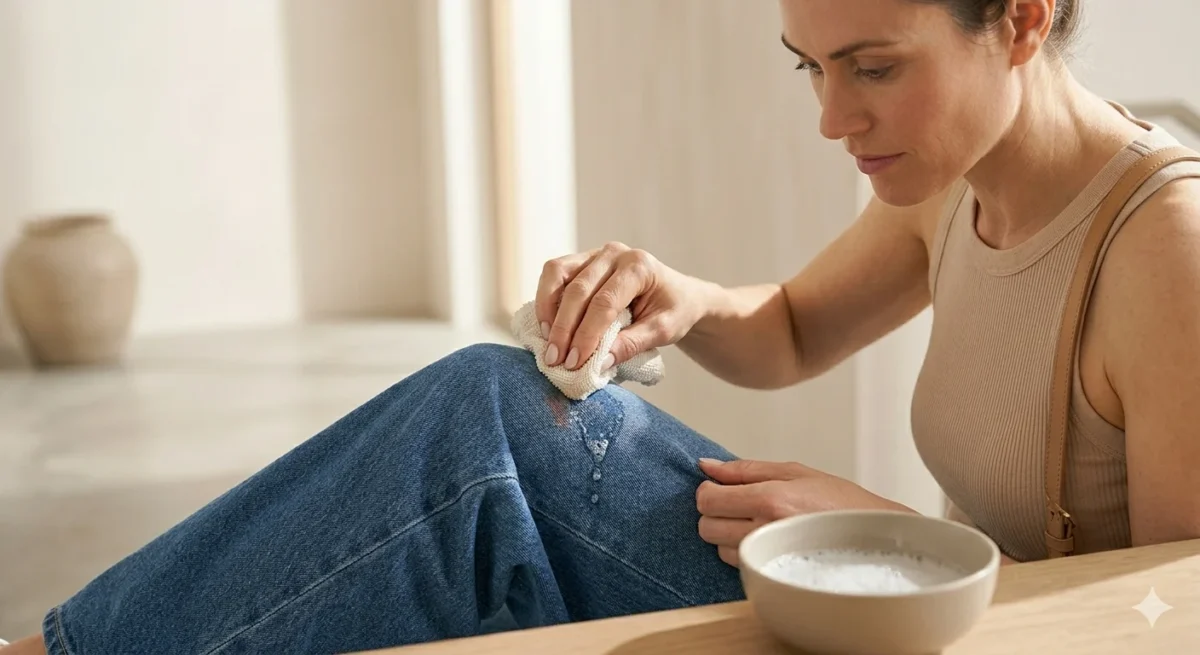
Jeans are among the most worn pieces in any wardrobe — and the more you wear them, the more likely they are to encounter coffee, oil, grass, wine, and everything else real life involves. The good news is that denim is a resilient fabric, and most stains can be removed fully if you act quickly and use the right method.
Here is a practical, stain-by-stain guide to getting your jeans clean without damaging the fabric or the colour.
The Golden Rules of Jeans Stain Removal
Act fast. Fresh stains are almost always easier to remove than dried, set stains. The sooner you treat a stain, the better your chances of removing it completely.
Never rub a stain. Rubbing spreads the stain outward, pushes it deeper into the fibres, and can damage the denim surface. Always blot with a clean cloth, working from the outside edge inward.
Test first. Before applying any treatment, test it on a hidden area of the jeans — an inner seam, the inside of a hem — to check that it does not discolour the denim.
Cold water first. Unless specifically indicated otherwise, cold water is the right first response to most stains. Hot water can set protein-based stains (blood, sweat, dairy) permanently.
Specific Stains: What Actually Works
Oil and Grease Stains
Oil stains require something that can break down and absorb grease. Sprinkle a generous amount of cornstarch, talcum powder, or baking soda directly onto the fresh stain and leave for 15 to 30 minutes. This absorbs the surface oil before it penetrates deeper into the fabric. Brush off the powder, then apply a small amount of dish soap — the kind formulated to cut through grease — directly to the stain. Gently work it in with your fingertip, leave for 5 minutes, and rinse with cold water. Wash as normal.
For dried oil stains: apply dish soap directly to the stain and leave overnight before washing. The extended contact time gives the surfactants time to break down the set oil.
Coffee and Tea Stains
Blot immediately with a clean cloth to remove as much liquid as possible. Rinse from the reverse side of the fabric with cold water — this pushes the stain outward rather than pressing it deeper. Apply a small amount of liquid laundry detergent or a dedicated stain remover pen directly to the stain, leave for 5 minutes, and rinse. Wash as normal in cold water. Avoid hot water — heat sets coffee stains.
Red Wine Stains
Act immediately. Blot — do not rub. Pour a small amount of sparkling water or cold still water directly onto the stain to dilute and lift it, then blot again. If the stain persists, apply a paste of baking soda and water to the stained area, leave for 15 minutes, then rinse and wash. Salt applied to a fresh red wine stain also absorbs the liquid effectively — cover the stain generously, leave for several minutes, then brush off and treat as above.
Grass Stains
Grass stains are a combination of protein, chlorophyll, and other organic compounds that bond to cotton fibres. Methylated spirits (rubbing alcohol) applied with a clean cloth to the stained area will break down the chlorophyll effectively. Alternatively, apply neat liquid laundry detergent and work gently into the stain before washing. Do not use bleach on coloured denim — it will strip the indigo as well as the stain.
Blood Stains
The critical rule with blood stains: cold water only. Hot water permanently sets blood into fabric. Rinse the stain immediately with cold water. For fresh stains, hydrogen peroxide applied directly to the stain will foam and lift the blood effectively — rinse thoroughly after application and wash in cold water. For dried blood, soak in cold salted water for 30 minutes before washing.
Pen and Ink Stains
Apply rubbing alcohol or hand sanitiser (which has a high alcohol content) directly to the ink stain using a cotton ball. The alcohol dissolves the ink and allows it to be blotted away. Work from the outside of the stain inward, using a fresh area of the cotton ball each time to avoid spreading. Rinse thoroughly and wash as normal.
When a Stain Will Not Come Out
Some stains — particularly old, set stains, or those that have been through a hot dryer — may not fully remove. In these cases, a colour-matched fabric pen or dye marker can disguise the residual mark. Alternatively, embrace the mark as part of the jeans’ character — or use the opportunity to experiment with distressing or bleaching effects that incorporate the stained area into a deliberate aesthetic.
At Sistribe Store, we make jeans to be worn — not kept perfect. But with the right care, even the most well-worn pair can come back looking clean and fresh.