
How to Style the Same Pair of Jeans 7 Different Ways — Getting More From What You Already Own
March 29, 2026
Why Do Jeans Lose Their Shape After Washing? How to Keep Your Denim Looking Brand New
March 29, 2026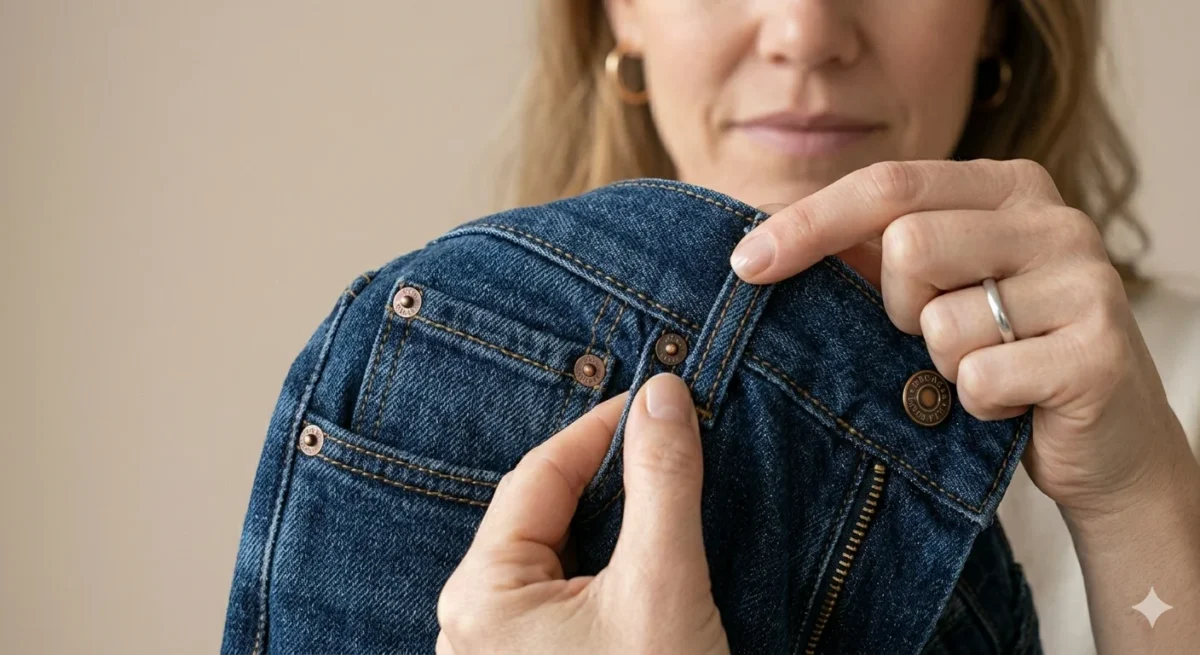
You have bought jeans that looked great in the shop and fell apart within six months. You have also probably walked past pairs that cost three times as much and wondered whether the price was justified. How do you actually know, before you buy, whether a pair of jeans is genuinely well-made — or just well-marketed?
There are specific, physical things you can check before you purchase that will tell you immediately whether jeans are worth your money. Here is exactly what to look for.
1. Check the Fabric Weight and Hand Feel
Good-quality denim feels substantial in your hands. Hold the waistband and let the legs hang. Quality denim has weight to it — it does not feel flimsy or insubstantial. Run your fingers over the surface. Quality denim has a smooth, consistent surface with a tight, even weave. Poor-quality denim often has an inconsistent weave, visible threads, or a surface that feels rough and uneven.
Check the stretch: give the fabric a gentle pull and release. Quality stretch denim should snap back immediately and completely. If it stretches out and does not return quickly, the elastane content is too high and the jeans will bag out within a day of wearing.
2. Inspect the Stitching
Stitching is one of the clearest indicators of garment quality. Turn the jeans inside out and look at the seams. Good-quality jeans have tight, even stitching with no loose threads, no skipped stitches, and no puckering along the seam line. The stitching should lie flat against the fabric, not twist or pucker.
Check the inner thigh seam specifically — this is the most high-stress point on any pair of jeans and the first place poorly-made jeans will fail. On well-made jeans, this seam will be reinforced, smooth, and tight. On cheap jeans, it will already show signs of stress: loose threads, visible gaps, or bulky overlapping fabric.
3. Look at the Hardware
Zip, buttons, rivets, and belt loops — these details tell you a great deal about a manufacturer’s priorities. Metal zippers that run smoothly and feel solid indicate quality. Plastic zippers, particularly ones that catch or feel loose, indicate corners cut. Rivets — the small metal studs at stress points like pocket corners — should be flat, even, and firmly attached. Loose or uneven rivets will pull away from the fabric quickly.
Belt loops should be securely stitched at both ends. Pull each one gently. On cheap jeans, belt loops come away easily. On quality jeans, they are firmly anchored.
4. Read the Fabric Label
The composition label tells you exactly what you are buying. Look for a high cotton content — at least 70-80% cotton for most jeans. The elastane content should be 1-2% for everyday jeans — enough for comfort without sacrificing shape retention. If the label lists polyester as a major component, be cautious — polyester-heavy denim often feels synthetic, pills quickly, and does not age well.
Also check the care label. Quality denim brands are confident enough in their product to give you clear, detailed care instructions. Vague or absent care labels suggest the manufacturer does not expect the product to last long enough for care to matter.
5. Check the Pocket Construction
Pockets are a surprisingly reliable quality indicator. Put your hand inside the back pocket. On well-made jeans, the pocket bag is made from sturdy cotton — it feels solid and does not pucker or twist. On cheap jeans, the pocket bag is often made from thin, flimsy synthetic fabric that quickly tears and causes the pocket to pull away from the jean.
Check that the pocket stitching is reinforced at the corners. These are high-stress points — they are where bags are carried, phones are stored, and hands are placed. The corner reinforcement should be either a riveted metal stud or a bar-tack stitch — a dense, tight cluster of stitching that prevents the pocket from tearing.
6. Smell the Denim
This sounds unusual, but it is genuinely useful. Cheap denim is often treated with harsh chemicals to achieve a particular look or feel. Very cheap jeans often have a strong chemical or formaldehyde-like smell that does not fully wash out. Quality denim smells like fabric — clean, neutral, or very faintly of the natural indigo dyeing process. If a pair of jeans has a strong synthetic chemical smell, it is a sign of low-quality processing.
What Good Quality Actually Costs in 2026
In 2026, genuinely well-made jeans typically cost more than fast-fashion alternatives — but significantly less than luxury designer denim. The sweet spot for quality women’s jeans is a price point that reflects proper construction, quality fabric, and fair production. Extraordinarily cheap jeans are almost always cheap for a reason. Extraordinarily expensive jeans are often paying for a logo as much as the garment.
At Sistribe Store, we make jeans at a price point that reflects what they are actually worth — quality fabric, careful construction, fair wages for the skilled women who make them, and a commitment to lasting longer than one season.
Now you know how to check. Use these tests every time you shop — and buy with confidence.