
Why Do Jeans Stretch Out During the Day? How to Keep Your Jeans Fitting All Day Long
March 29, 2026
How to Style the Same Pair of Jeans 7 Different Ways — Getting More From What You Already Own
March 29, 2026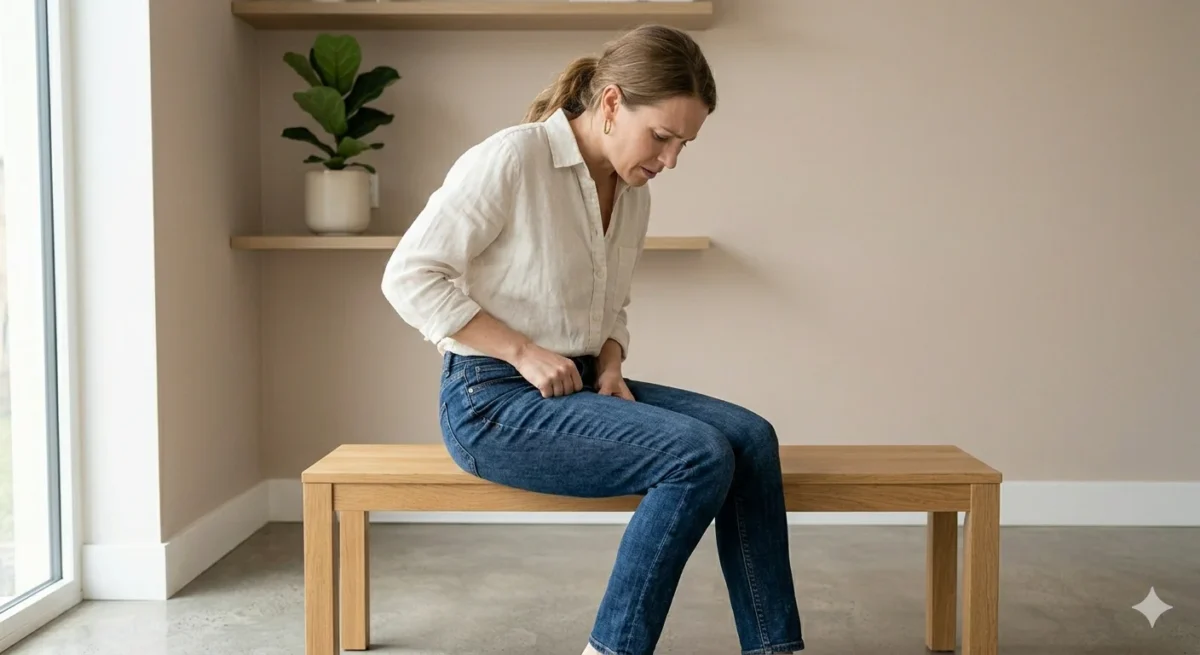
You know the feeling. You start the day in a pair of jeans you love. By midday, your inner thighs are burning. By the afternoon, the skin is raw, red, and painful. And sometimes — if it has been a long day — the jeans themselves have started to wear through at the inner thigh seam.
Thigh chafing in jeans is not a niche problem. It affects a significant portion of women — particularly those with fuller thighs — and it is something the fashion industry has historically ignored entirely. At Sistribe Store, we talk about this openly because it is a real, daily problem that deserves a real solution.
Why Does Thigh Chafing Happen in Jeans?
Chafing is caused by friction. When your inner thighs touch as you walk — which is completely normal and happens to the majority of women — and denim fabric is between them, the repeated rubbing of skin against denim creates heat and irritation. This is amplified by moisture, which reduces the friction threshold and allows irritation to develop faster.
Jeans are particularly prone to causing chafing because denim is a relatively coarse, rigid fabric. The seams of jeans — particularly the inner thigh seam where two pieces of fabric are joined — create ridges that cause additional friction. Tight-fitting jeans that press the fabric firmly against the skin all day make the problem significantly worse.
Choosing the Right Jeans to Prevent Chafing
Choose Soft, Stretch Denim
The softer and more flexible the denim, the less friction it creates against the skin. Look for jeans described as ‘soft touch’, ‘super stretch’, or ‘comfort denim’. These fabrics have a smoother hand feel and create significantly less friction than traditional rigid denim.
Choose Wider Legs
Straight-leg, wide-leg, and boyfriend jeans dramatically reduce thigh chafing because the fabric is not pressed tightly against the inner thigh. The leg hangs freely, reducing skin-to-denim contact to a minimum. Skinny jeans and slim jeans keep the fabric in constant contact with the inner thigh, which makes chafing inevitable for many women.
Look for Flat-Fell Seams
The inner thigh seam is where most chafing originates. Jeans with flat-fell seams — where the seam allowance is folded flat and sewn down rather than left raised — create a much smoother inner surface. Run your hand along the inner thigh seam before buying. If you can feel a prominent ridge, that ridge will cause chafing.
Practical Solutions That Work Right Now
Anti-Chafe Products
Body balms, anti-chafe sticks, and gel formulas applied to the inner thighs before wearing jeans create a protective barrier that dramatically reduces friction. Popular options include dedicated anti-chafe balms and plain petroleum jelly. Apply before getting dressed — not after the irritation has already started.
Wear Shorts or Smoothers Underneath
Wearing seamless cycling shorts, slip shorts, or thigh-length shapewear under your jeans is one of the most effective solutions available. The smooth fabric covers the inner thigh entirely, eliminating direct skin-to-denim contact. Many women consider this a permanent part of their denim routine — and it works.
Keep the Area Dry
Moisture dramatically accelerates chafing. Apply a light dusting of talcum powder or cornstarch to your inner thighs before wearing jeans, especially in warm weather. This absorbs moisture and keeps the friction threshold high for longer.
How to Heal Chafed Skin
If chafing has already occurred, allow the skin to air dry and apply a soothing balm — aloe vera gel, petroleum jelly, or a dedicated healing skin cream — twice daily until the skin has healed. Avoid wearing tight jeans until the skin is fully recovered. Loose, breathable fabrics will allow the skin to heal much faster.
You Deserve Jeans That Work for You
At Sistribe Store, we design our jeans with real bodies in mind. That means thinking carefully about seam placement, fabric softness, and leg width — so that every pair of jeans we sell is genuinely comfortable to wear all day, every day. Your thighs are not the problem. The wrong jeans are.