Crochet Bags: 15 Stunning Styles to Make Plus Expert Tips for Every Skill Level
May 15, 2026
Crochet Bag Pattern Free Where to Find Quality Free Patterns + What to Look For
May 19, 2026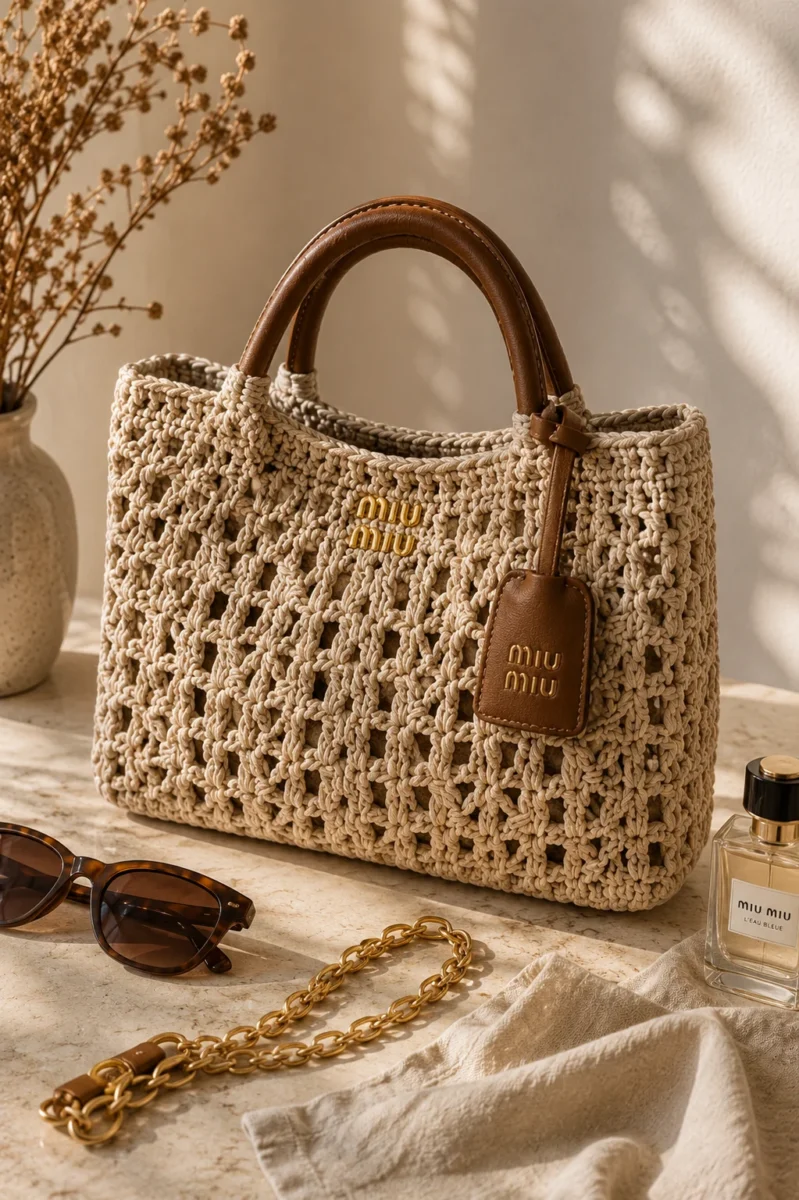
When the Miu Miu crochet bag appeared on runways, it did something remarkable: it made high fashion take handcraft seriously. These bags carried price tags in the thousands, yet the fundamental technique—crochet—is the same one your grandmother might have used to make doilies.
The difference between a $50 handmade bag and a $2,000 designer piece isn’t magic. It’s attention to detail, quality materials, thoughtful design, and impeccable finishing. Understanding what makes luxury bags special helps you bring those qualities into your own work.
This isn’t about making exact copies—it’s about learning from the best and applying those lessons to create bags with genuine designer appeal.
The Miu Miu Effect: When High Fashion Embraced Crochet
Miu Miu, Prada’s younger, more playful sister brand, has featured crochet bags across multiple collections. These pieces helped legitimize crochet as a high-fashion material, moving it beyond cottage-craft stereotypes.
The impact rippled across the fashion industry:
Other luxury brands followed. Valentino, Loewe, Chloé, and others introduced their own crochet pieces.
Crochet demand surged. Interest in learning crochet spiked following runway appearances.
Handmade gained prestige. The “imperfections” of handcraft became features rather than flaws.
Prices escalated. Designer crochet bags regularly sell for $1,000 to $3,000+, demonstrating that handcraft can command luxury prices.
For makers, this presents an opportunity. The techniques used in these bags aren’t secret—they’re accessible to anyone willing to invest time in developing skills and sourcing quality materials.
What Makes Designer Crochet Bags Special?
Let’s be honest about what you’re paying for with a designer bag:
Brand Name
A significant portion of the price covers marketing, retail overhead, and brand prestige. This isn’t available to independent makers, but it’s also not necessary for a beautiful bag.
Design Excellence
Professional designers understand proportion, balance, and how bags interact with clothing. These skills can be learned.
Material Quality
Designer bags use premium yarns, top-grade leather, and quality hardware. You can source similar materials.
Construction Quality
Expert finishing, invisible joins, and attention to detail throughout. These techniques are learnable.
Consistency
Designer pieces maintain consistent quality across units. As a maker, you can achieve this through careful attention.
The takeaway: much of what makes designer bags special is achievable through skill development and material investment.
Analyzing the Miu Miu Aesthetic
Miu Miu’s crochet bags share certain characteristics worth understanding.
Shape Language
Clean, defined shapes—often rectangular or rounded rectangles. Proportions feel balanced and deliberate. Silhouettes are simple enough to let the crochet texture shine.
Color Approach
Single colors or limited palettes. When multiple colors appear, they’re carefully coordinated. Many pieces feature neutral tones (black, cream, tan), with seasonal accent colors.
Texture Utilization
Crochet isn’t hidden—it’s celebrated. The stitch pattern creates visual interest. Texture variations add depth without overwhelming.
Hardware Integration
Minimal but intentional hardware. Quality metals (gold-tone, silver-tone) that complement the yarn color. Hardware serves function while adding polish.
Detail Consistency
Small details executed perfectly throughout—even edges, invisible seams, consistent tension. Nothing looks rushed or unfinished.
Overall Impression
Refined simplicity. These bags look sophisticated rather than crafty, approachable rather than fussy.
Key Design Elements to Emulate
Based on analyzing designer crochet bags, focus on these elements:
Simplified Shapes
Start with clean silhouettes. Complex shapes require perfect execution to avoid looking homemade. Simple shapes well-executed read as intentionally designed.
Proportional Harmony
Straps shouldn’t overwhelm the bag body. Hardware should complement rather than dominate. All elements should feel like they belong together.
Consistent Gauge
Even tension throughout creates professional-looking fabric. Inconsistencies are visible and detract from quality appearance.
Invisible Construction
Seams that don’t show, ends that don’t peek out, joins that blend in. The making process shouldn’t be visible in the finished product.
Intentional Color
Whether monochrome or multicolored, color choices should appear deliberate. Avoid random color combinations that suggest using up scraps.
Quality Finishing
Blocked properly, hardware attached securely, lining installed neatly. The finishing stage is where amateur and professional work diverge most noticeably.
Choosing Materials for a Luxury Look
Material quality dramatically impacts the finished appearance.
Yarn Selection
Mercerized Cotton
The sheen and smooth hand of mercerized cotton reads as higher quality than regular cotton. Worth the additional cost for showcase pieces.
Linen or Linen Blends
Linen’s natural texture adds sophistication. The slightly irregular fibers create visual interest.
Raffia
Natural raffia creates the straw-like bags popular in designer collections. Synthetic raffia works too and is easier to source.
Silk or Silk Blends
For evening bags, silk yarn adds subtle luster and drape that synthetic alternatives can’t match.
What to Avoid
- Low-quality acrylic (looks cheap, pills, stretches)
- Novelty yarns (rarely look sophisticated)
- Yarns that shed or fuzz excessively
- Inconsistent dye lots (creates visible color variation)
Hardware Considerations
Invest in quality hardware:
- Heavy-weight metals rather than plastic
- Plated finishes that won’t peel or tarnish quickly
- Style-appropriate choices (modern bags need modern hardware)
- Matching finishes throughout (all gold, all silver, etc.)
Lining Materials
For designer aesthetics, linings matter:
- Quality cotton or linen for casual bags
- Satin or silk for evening pieces
- Colors that coordinate with exterior
- Clean finishing on all seams
Construction Techniques for Designer Quality
Technique separates amateur from professional-looking work.
Tension Consistency
Practice until your gauge is even throughout a project. Test yourself: can you identify which row/round you started on? If so, your tension varies too much.
Invisible Joins
For pieces worked in joined rounds, master joining techniques that minimize the visible seam. Slip stitch joins should be snug but not tight.
End Weaving
Weave ends deeply into the fabric (at least 3-4 inches), following the stitch path to make them invisible. Trim close but leave a tiny tail to prevent working loose.
Blocking
Block every bag properly:
- Wet block cotton and linen
- Steam block delicate fibers
- Shape while blocking using forms if needed
- Allow complete drying before handling
Hardware Attachment
Secure hardware properly:
- Reinforce attachment points
- Use appropriate tools
- Test security before completing the project
- Consider professional installation for complex hardware
Color Palettes Inspired by Designer Bags
Designer color choices feel intentional. Here are palettes worth considering:
Classic Neutrals
- Black
- Cream/Off-white
- Camel/Tan
- Navy
- Gray
Safe choices that match everything. Never go wrong with well-executed neutrals.
Earth Tones
- Terracotta
- Olive
- Ochre
- Chocolate
- Sand
Natural, organic feeling. Popular in summer/fall collections.
Pastels
- Pale pink
- Sky blue
- Lavender
- Mint
- Soft yellow
Soft, approachable colors for spring/summer.
Bold Statements
- Vibrant red
- Cobalt blue
- Bright yellow
- Hot pink
- Electric purple
One strong color as the focal point. Requires confidence in execution.
Combinations
If using multiple colors:
- Monochromatic: different shades of one color
- Complementary: opposite colors used sparingly
- Neutral base with single accent color
- Natural palette: colors that appear together in nature
Hardware and Finishing Touches
Small details create big impressions.
Chain Handles
Some designer bags feature chain handles instead of or alongside leather. Quality chain in gold or silver tone adds instant polish.
Leather Accents
Leather bottom panels, handle wraps, or trim elevate crochet bags significantly. Learn basic leatherwork or source pre-made leather components.
Custom Hardware
Bag feet, D-rings, swivel clasps, and magnetic snaps should all match in finish and quality level.
Labels
Consider custom woven labels for inside bags. They add a professional touch and mark your work.
Packaging
How you present bags matters, especially for gifts or sales. Quality dust bags, tissue paper, and packaging elevate perception.
Styling Your Designer-Inspired Bag
A beautiful bag deserves thoughtful styling.
Outfit Coordination
Let the bag be a statement piece. Pair with simpler outfits that don’t compete for attention.
Seasonal Appropriateness
Straw-look bags for summer, dense cotton or leather-accented pieces for cooler months.
Occasion Matching
Match bag formality to the occasion. Even designer-style bags can look out of place if the context is wrong.
Confidence
Carry your handmade bag with pride. The fact that you made it is a feature, not something to apologize for.
FAQ
How much does an actual Miu Miu crochet bag cost?
Authentic Miu Miu crochet bags typically retail between $1,500 and $3,500, depending on size and style. Limited editions or runway pieces can cost more.
Can I make a bag that looks like Miu Miu?
You can create bags with a similar aesthetic by focusing on quality materials, clean construction, and sophisticated finishing. Making exact copies is both illegal and ethically questionable—instead, take inspiration and create original designs.
What yarn did Miu Miu use?
Designer brands typically use custom-produced yarns, often raffia, linen, or high-quality cotton. For home makers, mercerized cotton, quality linen, and natural raffia create similar looks.
Is it legal to sell “inspired by” bags?
You cannot use designer trademarks, logos, or names. Creating original designs inspired by designer aesthetics is generally acceptable, but marketing them as “Miu Miu style” or “Miu Miu inspired” can create legal issues.
Why are designer crochet bags so expensive?
Beyond materials and craftsmanship, you’re paying for design expertise, brand prestige, retail overhead, and marketing. The actual crochet work represents a fraction of the cost.
Can handmade bags compete with designer quality?
In terms of materials and construction, yes—skilled makers can match or exceed designer quality. What individual makers can’t replicate is brand recognition and retail distribution.
Conclusion
The Miu Miu crochet bag and similar designer pieces prove that crochet belongs alongside any other luxury material. The techniques aren’t exclusive—they’re available to anyone willing to learn.
Focus on what makes these bags special: quality materials, thoughtful design, consistent execution, and impeccable finishing. Apply those principles to your own work, and you’ll create bags with genuine designer appeal.
Your handmade bag might not carry a designer label, but it will carry something better: the proof of your own skill and creativity.